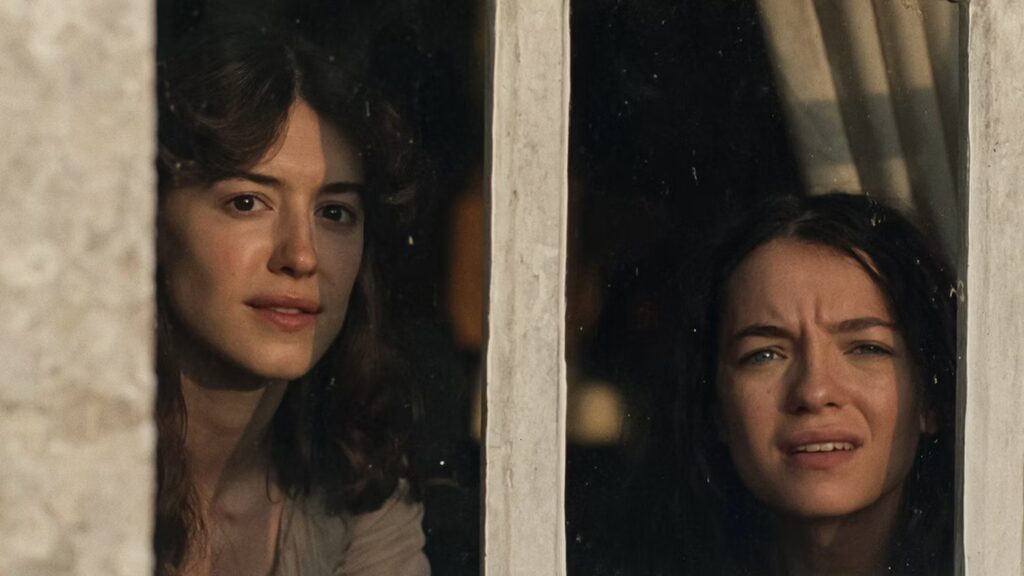

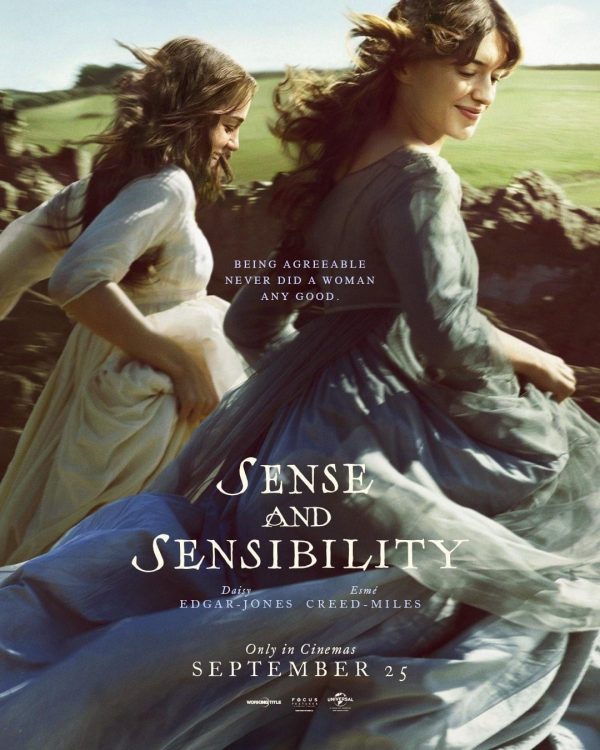
Sense and Sensibility, 2026.
Directed by Georgia Oakley.
Starring Daisy Edgar-Jones, Esmé Creed-Miles, Caitríona Balfe, Frank Dillane, George MacKay, Herbert Nordrum, Bodhi Rae Breathnach, and Fiona Shaw.
SYNOPSIS:
Sense and Sensibility follows two sisters, Elinor and Marianne Dashwood, as they tackle love, loss and financial uncertainty amid the societal expectations of 18th-century England.
Over three decades since Ang Lee successfully adapted Jane Austen’s Sense & Sensibility, the Dashwood clan leap from page-to-screen once again, this time filtered through the lens of Blue Jean-director Georgia Oakley.
A tale as old as time, well the 1790s anyway, the three Dashwood sisters are placed in a sticky situation by the death of their father, who leaves them with a pittance to survive on and the threat of homelessness in a society where stature is everything.
Elinore (Daisy Edger-Jones) is the independent, free-thinking realist, Marianna (Esmé Creed-Miles) the passionate firebrand who seeks more than just a dowry in a suitor, and Margaret (Bodhi Rae Breathnach) is the youngest, troubled only by blackberry stains on her dress. Together with their mother (Caitríona Balfe), the family are seconded to a small countryside cottage, where the mechanics of these types of stories – love, loss, deceit, and dancing – play out in familiar style.
Beginning with the call of a pigeon set against some soft-focus imagery, all accompanied by Roger Goula’s sumptuous score, Sensibility 2026 wraps its arms around you from the opening moments. You’re in Sunday afternoon, rain beating against the window, warm cup of cocoa territory here. Unfortunately, that’s your lot, because then this adaptation proceeds to suffocate everything in a joyless, maudlin atmosphere, resulting in one of the least enjoyable Austen-outings to date.
The performances are fine; Edgar-Jones is believably steadfast, and her relationship with Creed-Miles (the film’s MVP) is the beating heart of the story, even if the latter’s personality appears to change with the wind and an uneven script.
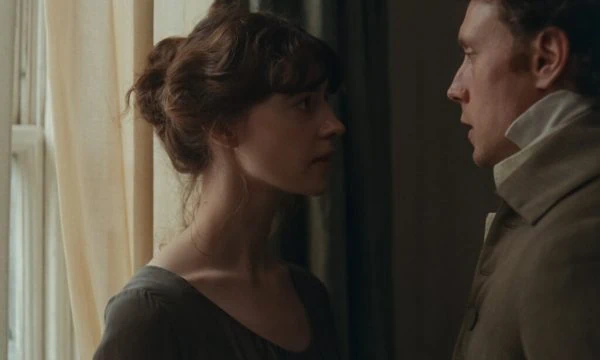
Unfortunately, the same cannot be said for the flatlined romance between Elinore and George MacKay’s Edward. As separate entities the two are fine, but the complete lack of chemistry for a will-they-won’t-they union that should drive the story, simmering with words unspoken, is reduced to a series of overwrought, repetitive scenes, none of which do anything to convince the audience that these two are part of a generational story of tearjerking love.

Frank Dillane gives good Pete Doherty, roguish-cad vibes as the dastardly Willoughby, Herbert Nordrum is requisitely mysterious and monosyllabic as the Colonel, and even Fiona Shaw’s Mrs. Jennings, who just feels like the actor on autopilot, is amusing enough. They’re symptomatic of the film as whole in that they’re just lacking that something to make this adaptation unique, or memorable. It all plays out like a recital, rather than them fully inhabiting the characters and story.
Even the regency dance sequence, so often bristling with underlying tension and romantic foreplay, an eagerly anticipated period-drama set piece if-you-may, is a drab, lifeless affair, shrouded in a darkness that’s in keeping with the bleak colour palette of the film.
Look, at least it’s something different in tone to the Winslet and Thompson award-winner, because a re-tread of that would have been wholly unwelcome, but what we get instead is a morose melodrama that’s an arduous slog to sit through.
Flickering Myth Rating – Film ★ ★/ Movie ★ ★
Matt Rodgers – Follow me on Twitter
https://www.youtube.com/watch?v=embed/playlist