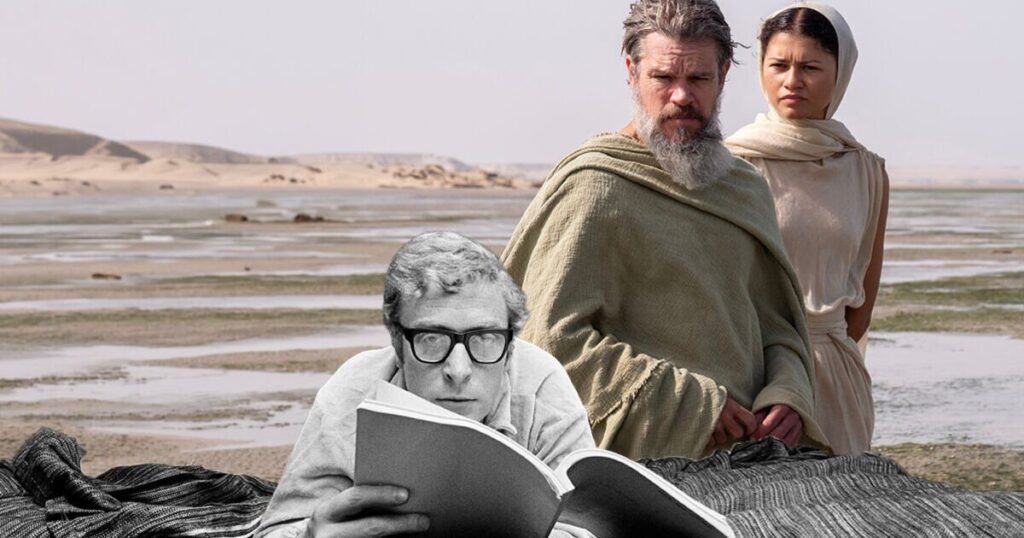

Veteran actor Sir Michael Caine has landed the last role he would have wanted at the age of 93 – as a Hollywood villain. The double Oscar-winning star of classic films including Zulu, The Italian Job and Get Carter is at the centre of an artificial intelligence (AI) row over a growing number of movie icons earning fresh fortunes by allowing their voices to be cloned for public consumption.
A computer-generated clone of Sir Michael’s distinctive voice narrates the entire 13 hours and 19 minutes of a new audiobook version of Homer’s epic ancient Greek classic The Odyssey. It was released earlier this year to coincide with the release of the star-studded action adventure film of the same name helmed by British director Christopher Nolan and has been downloaded hundreds of thousands of times worldwide.
Sir Michael has licensed his voice to AI company ElevenLabs (CORR), which created the audiobook and has also signed-up other major stars including fellow Oscar winners Matthew McConaughey and Liza Minnelli.
ElevenLabs, which is estimated to be worth in excess of £8billion, is one of several AI giants that have also secured rights from the estates of dead celebrities to the future use of their instantly-recognisable voices. These include John Wayne, Burt Reynolds, James Dean, Judy Garland, Sir Laurence Olivier, Rock Hudson and many more.
And, just prior to his death in September 2024 aged 93, James Earl Jones ensured his own vocal immortality by licensing his voice as Darth Vader to Lucas Film for use in future Star Wars projects.
But America’s estimated 135,000 voice actors – who are heard daily in adverts, TV and movie trailers, video games, audiobooks and animated series – fear many will lose their jobs to “authorised clones” and those who remain will suffer drastic reductions in pay.
Hollywood actors union SAG-AFTRA is demanding “guardrails” to ensure AI companies do not undercut their human members by using celebrity or even artificial voices to replace them.
David Lawrence, a member of the union’s steering committee on audiobooks, declared: “Well-known actors are getting millions of dollars to allow their voices to be cloned.
“But now even the small gigs to voice things such as online classes and budget audiobooks are increasingly getting absorbed by non-famous AI voices. Digital replicas are replacing real-life actors whose livelihoods often depend on smaller gigs.”
LA-based voice actor Nick Meyer, 26, said: “We hate the loss of livelihood. We hate the art form being taken away from us.”
He says he was offered about £74,000 by a major tech company to train AI voice replication models in the arts of inflection, dramatic pauses and other skills he uses daily as a voice actor.
He turned it down, declaring: “I am not going to sacrifice my morality for a pay cheque – no matter how big.”
There are currently dozens of pending lawsuits in America alleging “unauthorised training” of software models. Last month, a class action lawsuit was filed by voice actors in Chicago against nine tech companies – including ElevenLabs, Meta, Amazon and Microsoft – claiming they “collected voice and audio files without consent.”
A senior Hollywood production executive, who has used AI “voice tools” in at least two major movies, said “This is the most divisive issue the industry has ever seen and a key part of the much broader AI debate that will eventually affect every corner of the entertainment world.
“What it could come to mean is that future audiences will only hear two kinds of voice in the entertainment industry. The first would be that of a star who would either be speaking themselves or would have been paid a big fee for allowing their voice to be replicated by AI. The other kind will be a voice completely generated – for free – by computer.”