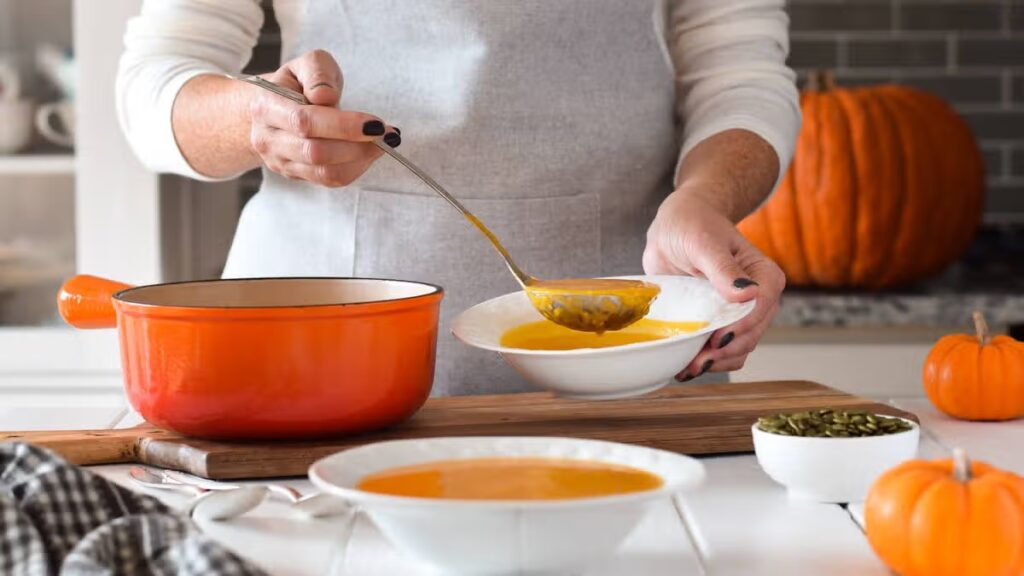

French chef Jacques Pépin uses one simple ingredient to make soups thicker, richer and more satisfying without hours of cooking

French chef Jacques Pépin uses one simple ingredient to make soups thicker, richer and more satisfying without hours of cooking(Image: JulieAlexK via Getty Images)
Soup is often overlooked when it comes to planning quick and straightforward weeknight meals. It rarely features on lists of dishes you can prepare in under 30 minutes, largely because most people assume that a good soup requires lengthy cooking time to allow the ingredients to combine properly, and for the liquid to reduce into something hearty and flavoursome.
That assumption is only partially correct. While developing depth of flavour does take some time, having the right ingredients to hand means this need not be an all-day affair.
Although pasta and potatoes are commonly used to add body to soups, renowned French chef Jacques Pepin favours adding polenta to achieve a thicker consistency.
The brilliance of his technique lies in its simplicity. In his kale soup recipe, he whisked one-third cup of polenta into one cup of cold water in a bowl until smooth.
Combining it separately is a small yet vital step that prevents the polenta from forming lumps once it is introduced to the soup, reports the Express.
Once the polenta mixture is completely smooth, he adds it directly to the simmering soup and allows it to cook alongside the remaining ingredients for 15 to 20 minutes.
During cooking, the polenta gradually softens and thickens the broth, imparting a subtle, corn-like sweetness and a fuller, richer texture that is thoroughly satisfying.
For those concerned about a gritty finish, there is no need to worry. It simply lends the dish a pleasingly rustic quality.
This polenta technique works brilliantly in all your go-to soups, such as minestrone. The polenta paired wonderfully with the beans and vegetables, resulting in a satisfying Italian-style meal.
Incorporating polenta rather than pasta into chicken soup would be an excellent way to make the broth more filling and gentler on the throat when you’re feeling under the weather.
A spoonful of polenta in tomato soup would provide extra thickness and probably balance out the sharpness, reducing the requirement for added sugar.