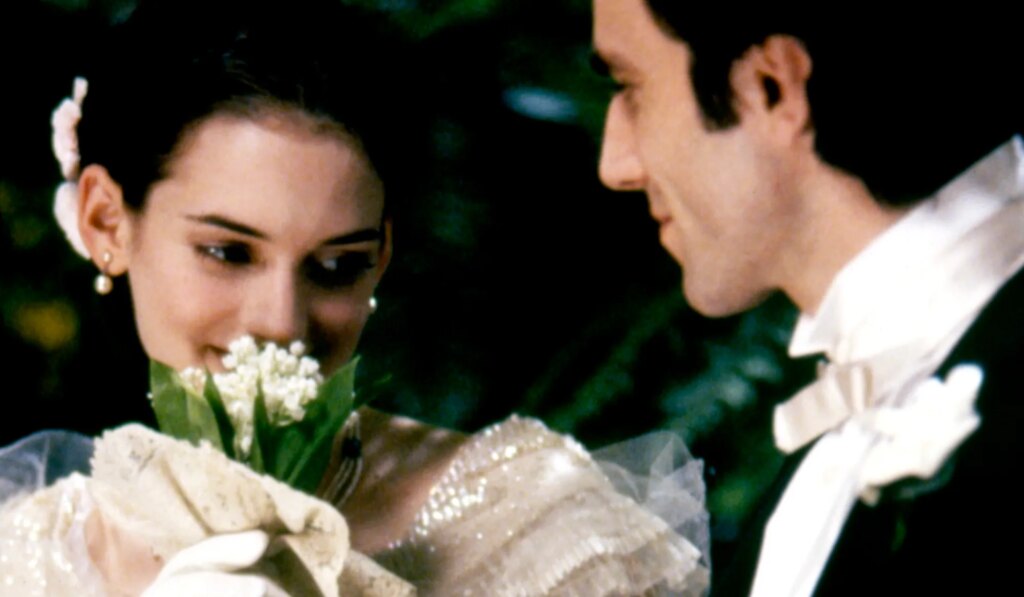

The King of Comedy (1982)
It takes most viewers several rewatches of Taxi Driver before they realize that Travis Bickle is, above all, pathetic. Not so with Rupert Pupkin! Here is the lonely antihero that De Niro plays in The King of Comedy. Written by Paul D. Zimmerman, The King of Comedy follows ambitious comedian Pupkin as he embarks on a desperate plot to get attention by kidnapping Jerry Langford, a talk show host played by Jerry Lewis.
Pupkin is no less frightening than Travis Bickle, even if he presents himself as affable and funny. De Niro injects a sense of menace into his character’s smile, whether he’s making appeals to Langford or addressing the studio audience. Yet where Bickle’s exploits largely take place in his head, Pupkin has a studio audience and viewers on television—perhaps several, depending on how one reads the movie’s depiction of reality and fantasy. However, the audiences don’t make Pupkin any more accepted and loved, putting a new spin on the loneliness that affected his predecessor, Travis.
The Last Temptation of Christ (1988)
Scorsese’s movies have been as much about Christianity as they have been about crime and rock and roll. From Mean Streets onward, his characters have sought salvation and wrestled with the fear of damnation, often calling out to God for direction. In that way, the Jesus of The Last Temptation of Christ, played by Willem Dafoe, isn’t that different than any of Scorsese’s other protagonists, even if he’s called to be the son of God.
Written by Taxi Driver scribe Paul Schrader and adapted from the novel by Nikos Kazantzakis, The Last Temptation of Christ depicts a fully human Jesus, someone who wants nothing more than to marry Mary Madgeline (Barbara Hershey) and spend his days working, but who cannot escape the call of God. To some, The Last Temptation of Christ feels blasphemous, as this Jesus can be read as giving into the final temptation, the one that allows him to avoid sacrifice. But those watching closely will see that the devout Scorsese has given us a faithful Jesus, faithful even to death on a cross.
The Age of Innocence (1993)
Scorsese famously called The Age of Innocence, which he and co-screenwriter Jay Cocks adapted from the Edith Wharton novel, his most violent film. At first that claim sounds hyperbolic. After all, no one in this story of romance among the monied elite of 1870s New York pulls a gun or sticks someone’s head in a vice. Yet when one pays attention to the emotional vulnerability on display, and the great risks assumed by those who seek love, only to have it flatly denied, then Scorsese’s assessment rings true.
Daniel Day Lewis plays Newland Archer, a lawyer who hopes to marry May Welland (Winona Ryder). But when Welland’s cousin, the Countess Ellen Olenska (Michelle Pfeiffer), returns to New York after her failed marriage to a Polish nobleman, Archer’s feelings start to shift. The trio must navigate not just their complicated emotions, but also the demands of high society, a veritable tribe, which already have punished Ellen for the crime of her failed marriage. In the end, The Age of Innocence captures a desire that can never be fulfilled and a longing that can’t be articulated, putting its characters through pain greater than any mobster could ever inflict.