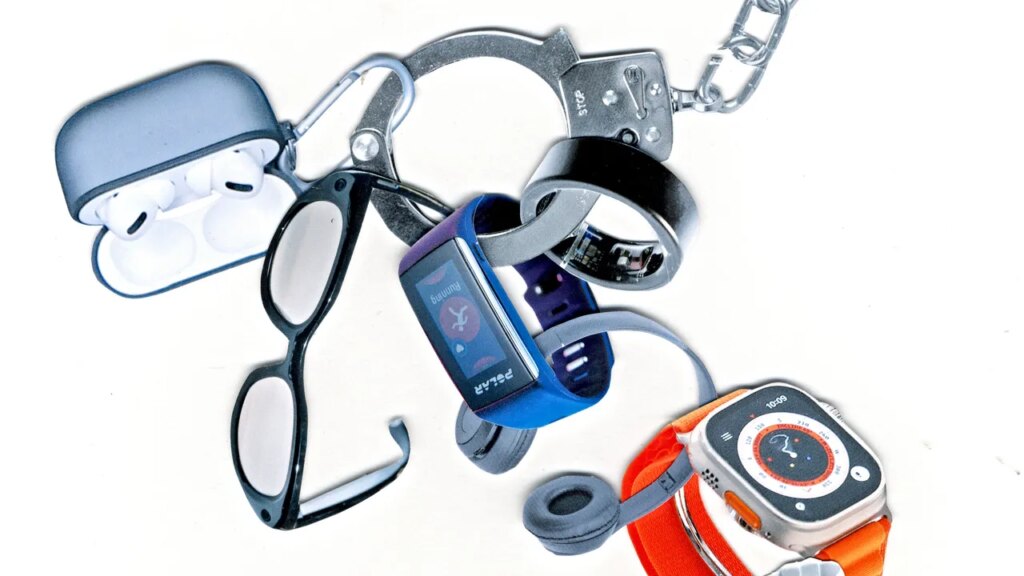

Which, to be fair, is not entirely their fault. In many cases, the robot tail wags the living dog by tricking it—tricking us—into caring about obscure metrics, then gamifying the process of improving them. Two years ago I’d never even heard of a VO2 max. But after a late-night deep dive into my health app revealed that I have one; that unbeknownst to me, my watch had been keeping tabs on it for years; and—horror of horrors—that mine was merely above average rather than high, optimizing this questionably important measure became a personal obsession.
I am a geek, and a try-hard, and an egoist. I’d love to throw my watch into the East River. But I can’t, because I’ve grown accustomed to knowing how many imaginary flights of stairs I climbed yesterday (so many!) and just how deeply I slept last night (not very!). The watch hasn’t transformed me into a monster, but it’s enhanced my preexisting monstrous conditions: a thirst for validation, a need to be constantly graded and evaluated.
Things could be worse. I could be addicted instead to the pervert glasses manufactured by Google and Meta or the ones to come from Apple and Snap. Anecdotally, I’ve read that wearable computers like these are a godsend for people with visual impairment. This is good for them. But nobody else could possibly have a compelling reason to put on Meta glasses. These devices are morally questionable as well as aesthetically heinous; at least when dirtbags attempt to use their smartphones to take creepshots of strangers, it’s possible to catch the attempted voyeurs in the act.
Computer glasses erase that prospect. They’re the embodiment of Daniel Lavery’s immortal evisceration of Black Mirror: “What if phones, but too much?”
We already live in a hall of black mirrors. Screens have invaded our taxis, our billboards, our children’s toys, our very refrigerators. There’s a “smart” version of everything from washing machines and light bulbs to window coverings and umbrellas. My grill has an app. Tech has crept into every facet of everyday life, like an invisible fog of ones and zeros. All that, and you need a leather belt with a tiny computer inside that tells you when you’ve eaten too much? Isn’t that what a regular belt is supposed to do?
No more! If this is smart living, I’d rather be dumb.