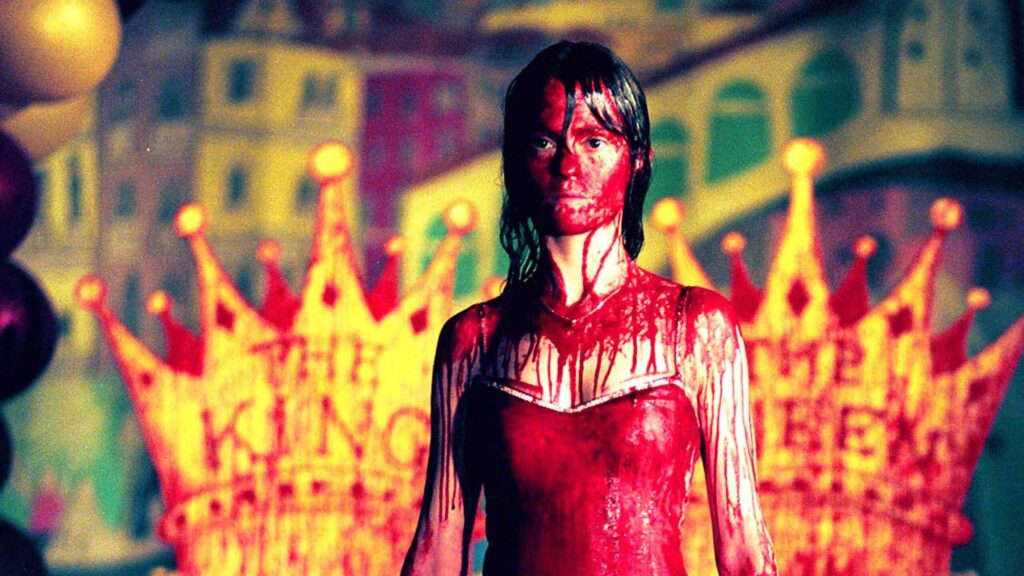

Mike Flanagan has turned Stephen King’s Carrie into a TV series, but this wasn’t the first attempt at a Carrie television production.
NB: Spoilers ahead for all previous versions of Carrie, including the book and film adaptations.
Mike Flanagan is digging his nails into a Stephen King story once again with his Carrie TV show, coming to Prime Video in October.
It’s a story that’s been adapted several times before. Brian De Palma’s 1976 film is by far the most beloved: starring Sissy Spacek as a bullied, oppressed girl discovering her telekinetic powers, it remains an excellent cinematic terrorfest. Director Kimberly Peirce’s 2013 remake, starring Chloë Grace Moretz, is almost word-for-word the same, but lacks the original’s pure power.
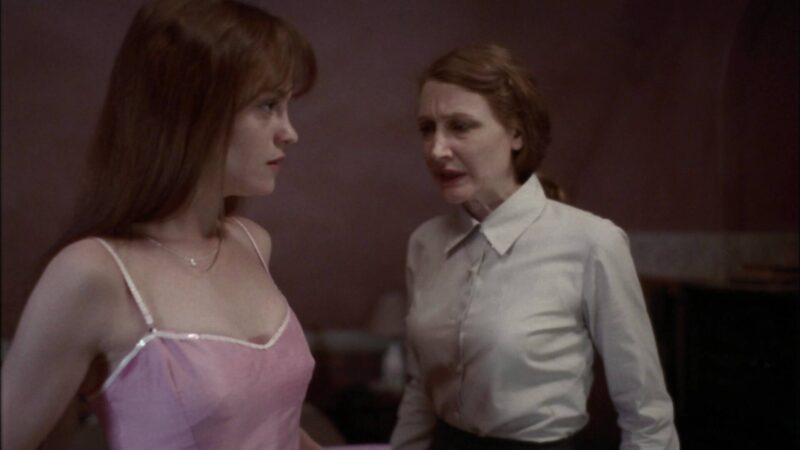
Between those two fits a TV movie released in 2002, starring Angela Bettis as Carrie, Patricia Clarkson as Carrie’s religious mother, Margaret, and Kandyse McClure as the school tormentor, Sue.
Out of the three Carrie movies, this one is comfortably the least well known. It’s also by far the longest version at 132 minutes, and was made on the lowest budget. It’s pretty obvious, too: scenes where Carrie makes rocks rain from the sky look, er, unconvincing to say the least.
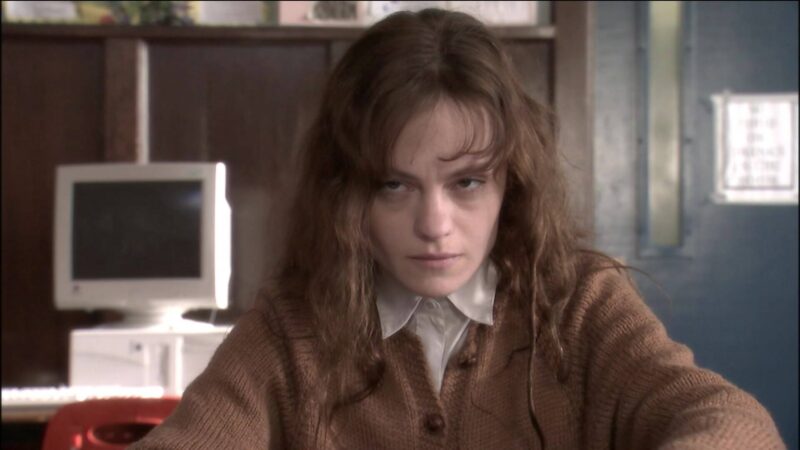
Written by Bryan Fuller (later of Pushing Daisies and Hannibal fame) and directed by David Carson (he of Star Trek Generations, amongst many other credits), the 2002 Carrie was initially intended as a TV pilot, designed to kickstart a whole new series of Carrie adventures. And yes, that did mean that the ending was changed, but we’ll get to that.
The movie was commissioned by NBC in May 2002 and made it into production just a month later, landing on TV screens in November that year. Stephen King wanted nothing to do with it, thanks to the bad experience he had with the 1999 feature film The Rage: Carrie 2, so Fuller and Carson had to rely on each other to make this the best version they could.
One of the biggest challenges, for anyone adapting the novel, is to make Carrie’s mother terrifying in her abuse and religious fervour but without making her into an offensive caricature. This was also a challenge for Fuller, who was asked by actor David Keith to include something a little more positive about religion in the film. Fuller agreed, and wrote new scenes which showed Margaret and Carrie’s Christianity less negatively- even though Clarkson’s Margaret is still pretty extreme in her beliefs.
Fuller and Carson’s best efforts to do King’s novel justice didn’t really work out in the end. The film holds a 20 percent critic score on Rotten Tomatoes and 43 percent audience score to give you the overall vibe of how it was received. It’s not a great film on its own, but when compared to De Palma’s acclaimed work?
Yikes.
Being unable to rely on Stephen King’s input when bringing his story to life was something Fuller described as “daunting” to Fangoria in 2004.
There’s an irony, though. Despite its dreadful special effects and clumsy storytelling, however, this version of Carrie, aside from the ending, is actually the most faithful to the source novel. De Palma’s version focuses largely on Carrie’s destruction of the school and jumps straight into her arriving at home, whereas the TV version also covers Carrie’s journey through the town and the wreckage she causes in more detail.
The ending, then.
In the book, Carrie’s powers grow stronger, meaning she can develop mental connections with people around her. After Carrie has destroyed much of the town and killed her mother, Sue can sense that Carrie’s dying. She finds her, kneels next to her and stays with her as Carrie takes her last breath. Sue assures her that she meant no harm and that she had nothing to do with what Carrie was subjected to on prom night.
In the 2002 film, Carrie doesn’t die. Instead, she heads home, having destroyed the entire town in a blind rage. There, her mother tries to drown Carrie in the bath, prompting Carrie to use her powers to stop her mother’s heart. Sue finds Carrie, resuscitates her, the two fake the telekinetic girl’s death, and they both drive off to Florida.
Fuller revealed to CBR in 2006 that they also had a whole other plot line with Jasmine Guy playing a character investigating a paranormal event in “the small town that was supposed to set up the franchise of the series.”
Presumably, most of the TV series would have followed Sue and Carrie’s new life in Florida. Perhaps the two would have aimed to help those who also find themselves with telekinetic powers or perhaps they would have simply tried to stay hidden as the police continue to investigate what happened to Carrie after her prom night.
NBC never gave any official reason as to why they didn’t want to move forward with a series. Variety reported that the movie gathered solid audience numbers, but nothing ever came of it. Fuller, though, didn’t think NBC ever had any intention to make a series out of the ending.
“I don’t think the network ever intended to do a series, they were just playing the studio,” he told Comic Book Resources. “But we jumped through all the hoops and had all the elements in play for a series with Carrie on the road with Sue and what would happen in the wake of Prom Night.”
Fuller also told the outlet that he had already written the outline for a new episode in the series, but MGM “put the kibosh on the whole deal.” He then admitted that the film didn’t work quite as well as it could have, particularly due to its special effects, which he conceded looked “cheap”.
“Basically, the studio said no more money and the network needed more effects,” he said. “The effects studio did some great work but some of it – not so much. We weren’t giving them the resources they needed to do them right, but we were insisting on having them. It bit us on the ass because it looked cheap.”
The film certainly didn’t win any awards for its visuals, but Fuller has maintained that he had a good time making the film, describing his time on it as “a ball”.
Now, Flanagan is having a go at adapting King’s best-selling novel into an eight-part TV series. Perhaps he’ll have better luck with it.