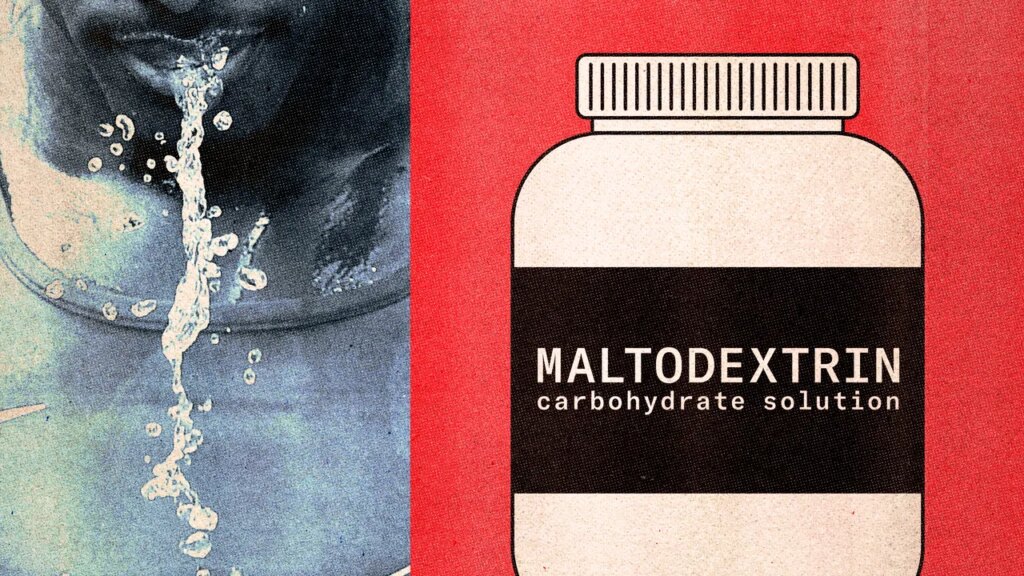

If you spotted the likes of Cristiano Ronaldo, Kylian Mbappé, or Lamine Yamal taking a swig of liquid, swishing it around their mouth, then spitting it onto the field at this year’s World Cup, you’ve likely witnessed a phenomenon called carb rinsing. Researchers have found that swilling a mouthful of liquid carbohydrate solution but not swallowing it ‘tricks’ the body into feeling more energetic without the need to ingest anything. That’s why it’s become popular among pro soccer players.
“Every Arsenal player has done it at some point,” says Tom Allen, who was head of sports science and performance at the UK soccer club for nine years, departing shortly after the team became Premier League champions in 2026. “You’ll see a lot of players do it at the back end of games. That time period is when they’re either going to get cramps or their outputs are going to drop because they’re fatigued.”
Once a niche practice among endurance athletes, carb rinsing is becoming more widespread, and researchers have experimented with other mouth rinses too, with a review published last month finding that caffeine and menthol formulas could also have beneficial effects. So should you be adding a mouth rinse to your fitness routine? Here’s what sports science experts have to say.
What is carb rinsing?
The concept of carb rinsing originated in 2004 with a clinical trial conducted at the University of Birmingham. It found that cyclists who rinsed their mouth with a solution containing 6% maltodextrin—a carbohydrate powder made from starch that’s easily digested—eight times during a one-hour time trial completed a set biking distance faster, with an increased power output compared to a placebo. This study sparked a boom in research across cycling, running and strength training, with recent reviews concluding that carb rinsing improves strength, high-intensity exercise, and cognitive performance. Though increases are relatively small (more on that later), the results reveal a fascinating connection between body and brain that athletes can use to their advantage.
“Carb rinsing does not affect your blood sugar levels or metabolism,” says Taiyyibah Moughal, a registered dietitian at Empowered Beast Nutrition. Rather, it works by stimulating receptors in the oral cavity. “Researchers have done brain scans showing that the frontal cortex is being excited.” Scientists theorize that the athletic improvement is due to activation of areas of the brain associated with reward and motor control.
But why not just swallow a carbohydrate gel instead? “With marathon runners, sometimes drinking all that sweetness gets a little tiring, and they don’t want to drink anything else or take a gel,” says Moughal, who works with long-distance runners, cyclists, and MMA fighters. Allen says that carb rinsing is especially useful for soccer players who want to avoid a bunch of liquid swirling around in their stomach while they’re on the field. “If they’re not used to consuming loads of carbohydrates, they can have a real dodgy stomach during the game. [At Arsenal] we would steal a lot of theory from cycling and marathon running, because if you think of footballers playing three games in eight days, by the third game it’s going to feel like they’re doing a marathon.”
How effective is carb rinsing?
While dozens of studies have shown a statistically significant improvement in exercise performance due to carb rinsing, it’s important to note that the gains are small, and many of the studies used small sample populations, mostly comprised of athletes. The original 2004 study tested nine cyclists and found they completed the time trial 2.9% faster on average and displayed a mean power output increase of 2.7 per cent. A 2025 review of 35 studies found that 10 seconds was the optimal duration for rinsing, and effects were most pronounced for aerobic endurance exercise rather than high-intensity sports.
In the world of elite sports, where every stride, kick, throw, and split-second decision counts, those stats are enough to make carb rinsing an established protocol—but only if it works for the athlete. “What we’re trying to do every game is compound all these small percentages to try and get ahead of the opposition,” says Allen. “But what you do during a match is very individual, and depends on how your body responds.”