
In October 2014, GoPro was one of the hottest companies on Wall Street.
The action-camera maker had gone public just a few months earlier. Its stock was soaring. Its cameras were everywhere. Surfers, snowboarders, skiers, mountain bikers, scuba divers, stunt performers, YouTubers, and even Hollywood productions were using GoPros to capture a new kind of immersive, first-person footage.
At its peak on October 10, 2014, GoPro traded around $85 per share and had a market cap of roughly $12 billion. Founder Nick Woodman’s 45% stake was worth $5.4 billion.
A little more than a decade later, GoPro was trading near $1. The entire company was worth a tiny fraction of its former peak. It had laid off employees, explored a sale, warned investors about its ability to continue as a going concern, and become one of the most painful tech flameouts of the 2010s.
Just a few days ago, the share price hit an all-time low of $0.60, which gave the company a market cap of around $100 million.
And then something unusual happened thanks to a YouTuber named Markiplier…
Who Is Markiplier?
If you are over the age of 35, as I am, you may have never heard of a YouTuber named Markiplier. Markiplier first broke out in the early 2010s during YouTube’s gaming boom. His exaggerated reactions to horror games such as “Amnesia: The Dark Descent” and “Five Nights at Freddy’s” made him one of the platform’s most recognizable personalities. But what separated him from many gaming creators was not just the shouting, jokes, or jump scares. It was the connection he built with his audience. Fans did not just watch him play games. They followed him across formats, projects, platforms, and business ventures.
Over time, Markiplier became much more than a gamer with a webcam. He moved into live-action comedy, scripted productions, interactive storytelling, podcasts, merchandise, and filmmaking. His YouTube Originals projects “A Heist with Markiplier” and “In Space with Markiplier” were elaborate choose-your-own-adventure style productions that required large casts, complicated branching storylines, and serious production infrastructure.
Today, his YouTube channel has over 40 million subscribers, and his videos have been viewed billions of times.
But he’s not just a YouTube star anymore.
Earlier this year, Markiplier released “Iron Lung,” a feature-length science-fiction horror movie based on the indie video game of the same name. He wrote, directed, edited, produced, financed, and starred in the film himself. The movie reportedly cost around $3 million to make. It grossed $51 million.
When you add it all up, Markiplier is one of the richest YouTubers in the world. In our recently published ranking of the Richest YouTubers in the world, he ranked #7 with a net worth we currently estimate at $95 million.
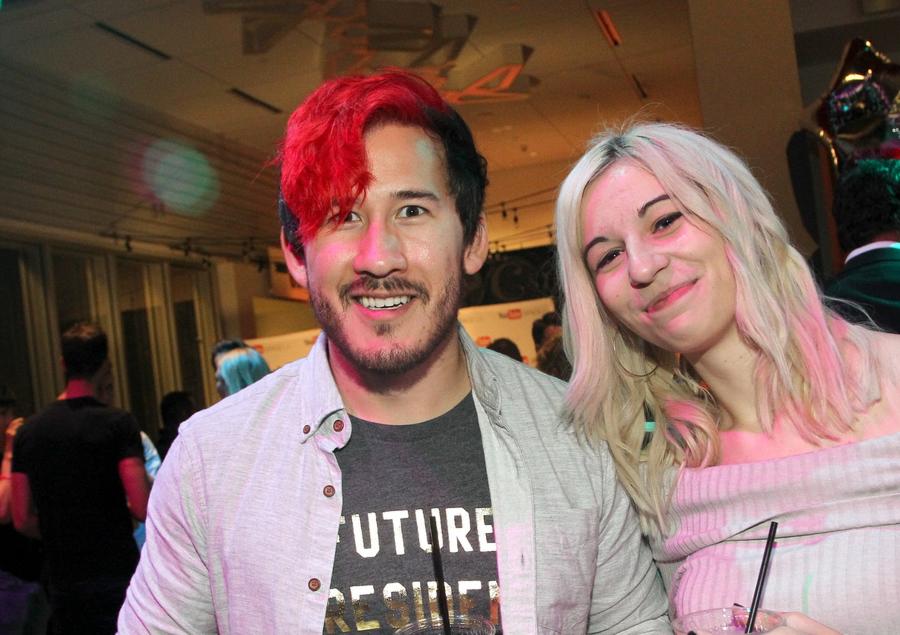
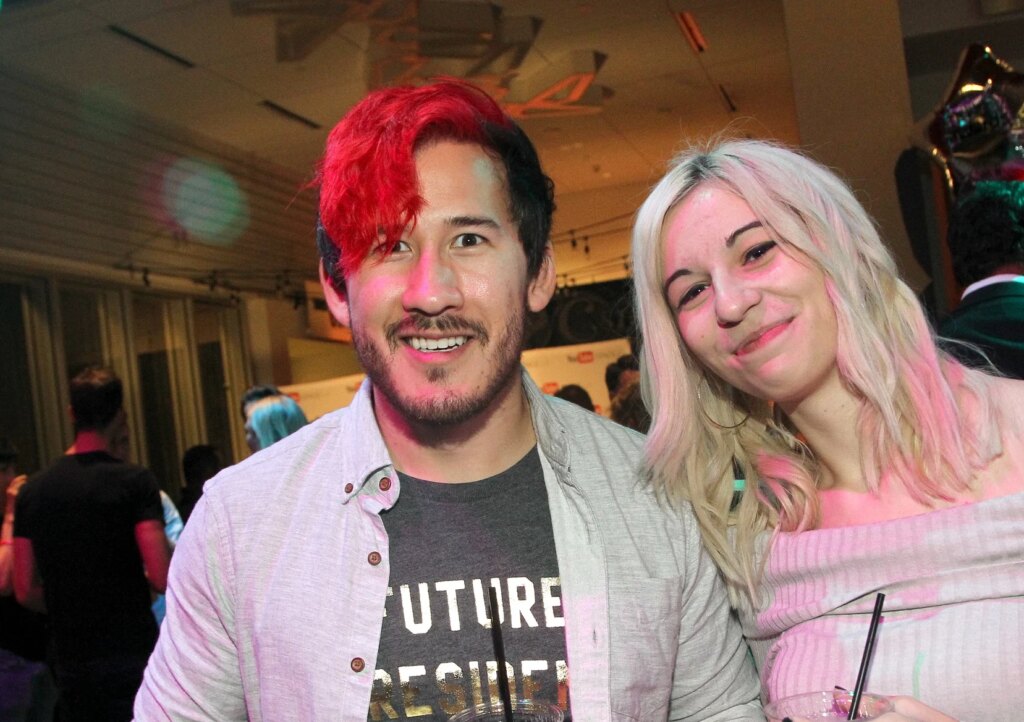
(Photo by Tommaso Boddi/Getty Images for YouTube)
Buying A Huge Chunk Of GoPro
Over the weekend, it was revealed that Markiplier acquired an 8.5% stake in GoPro. That makes him GoPro’s largest shareholder after founder Nicholas Woodman, who still owns roughly 16% of the company.
The exact amount he paid has not been disclosed, but we can make a reasonable estimate. If GoPro was worth around $100 million when the stock hit $0.60, then an 8.5% stake would be worth about $8.5 million. Depending on the timing of his purchases and his average price, Markiplier likely spent somewhere in the neighborhood of $8 million to $10 million buying GoPro stock.
What makes the investment especially interesting is that Markiplier does not appear to be approaching GoPro like a Wall Street activist. He is not Carl Icahn or Bill Ackman. He is not trying to launch a proxy fight, force a breakup, or strip the company for parts.
He appears to actually believe in the product.
Markiplier used GoPro cameras to film behind-the-scenes footage on “Iron Lung,” but he reportedly did not think they were good enough to use as the main cameras for the movie. That changed when he saw GoPro’s new Mission 1 Pro ILS, a tiny interchangeable-lens camera that GoPro is positioning as a cinema camera.
To Markiplier, this was not just another action camera. It was a possible bridge between YouTube production and real independent filmmaking. The Mission 1 Pro ILS is small enough to use in tight spaces, light enough to move quickly, and dramatically cheaper than many traditional cinema setups. Markiplier has argued that the cost of filmmaking tools remains one of the biggest barriers keeping creators from making higher-end productions.
That is the real logic behind the GoPro bet.
Markiplier has already proved that a creator can mobilize an online audience into movie theaters. Now he seems interested in the tools that could help other creators make serious movies without needing studio-sized budgets.
As you might expect, GoPro’s long-battered stock has soared on the news of Markiplier’s investment. As I type this article, shares are trading around $1.24, roughly double the all-time low they hit just days ago. That brings the company’s market cap back to around $200 million. That is still a universe away from the $12 billion valuation GoPro commanded in October 2014, but for a stock that looked left for dead, it is a very real sign of life.
Whether this turns into a true turnaround or just a brief meme-stock-style bounce remains to be seen. But the setup is fascinating: a company born from a surfer’s dream, once worth $12 billion, nearly wiped out completely, is now getting a surprise vote of confidence from one of the most powerful independent creators on the internet. Markiplier built his career by proving that creators do not need Hollywood’s permission to make something big. Now he is betting that GoPro might still have a role to play in helping them do it.