
Art begets art – so it is no surprise that many of the greatest rock stars were deeply inspired by novels and films. Oftentimes, musicians use the popular storytelling of the page and the big screen to connect with their audience and capitalize on a shared experience, adding a level of intimacy to their work. Conversely, assuming the voice of a fictional character (as some of these musicians do) can allow for a degree of separation when exploring more difficult subject matter through their music. Whether the authorial intent is to bring together or keep apart, it is always interesting to track connections across artistic mediums. In no particular order, here’s ten weird, whimsical, wonderful, and sometimes disturbing cinematic and literary references in the classic rock canon.
10
“Ramble On” by Led Zeppelin (1969)

Any Led Zeppelin fan worth their salt knows lead singer Robert Plant has an affinity for The Lord of the Rings, along with the other works of author J.R.R. Tolkien. These fantasy novels had a huge influence on Plant’s songwriting and allusions to Tolkien’s work can be found in many of his pieces. The most direct references appear in the lyrics of “Ramble On,” the seventh track on their 1969 album Led Zeppelin II. Inspired by Tolkien’s world-building and the mythological adventure featured in the fictional Middle Earth, Plant penned the third verse of the song: “T’was in the darkest depths of Mordor/ I met a girl so fair/ But Gollum and the evil one/ Crept up and slipped away with her.” In these short lines, Plant sets the scene by mentioning Mordor (the creepy, desolate realm of the Dark Lord Sauron, AKA “the evil one”) and Gollum, a character introduced in Tolkien’s 1937 novel The Hobbit. Gollum, who used to be a normal guy before obsession over the ring drove him mad and creaturely, lives in a damp cave and does little else but covet the One Ring. Along with setting the tone of a mystical journey, the allusions to LOTR and The Hobbit also solidify the messaging in the lyrics: if you allow yourself to be consumed with a single obsession, you will inevitably be unhappy and alone, like our sad little friend Gollum.
9
“Space Oddity” by David Bowie (1969)

Surely one of the strangest and most original rock songs to make it into the mainstream, David Bowie’s “Space Oddity” takes the listener on a journey through the stars. The lyrics tell the story of a fictional astronaut by the name of Major Tom, who is heading out alone on a galactic solo mission. The lyrics are from both Major Tom and ground control’s perspectives as they communicate about his journey into the unknown. Eventually, to ground control’s dismay, they lose contact with Major Tom, and he is never heard from again. The song is an allegory for Bowie’s feelings of isolation and alienation, as well as a direct reference to the Stanley Kubrick film 2001: A Space Odyssey, which had come out the previous year. The titles are very similar, and the fatal journeys into space in the film and song run parallel to one another. In an era when there was so much focus and discussion surrounding space and astronauts, this song captures the equal measures of terror, fascination, and excitement that people were feeling all over the world.
8
“White Rabbit” – by Jefferson Airplane (1967)

“White Rabbit” was written by Jefferson Airplane’s Grace Slick for their 1967 album Surrealist Pillow. The track was released as a single for the album, peaking at number eight on the Billboard Hot 100. The song is a huge part of rock and roll history, representing the counter-culture movement of the late 1960s and the rise in psychedelic/acid rock during that time. “White Rabbit” would never have existed, of course, had Lewis Carroll never written Alice’s Adventures in Wonderland over a century earlier in 1865 (as well as its sequel, Through the Looking Glass, in 1871.) The entire song is full of imagery from Carroll’s book, including references to the Red Queen, the White Rabbit, the “hookah-smoking caterpillar,” the White Knight, the dormouse, and Alice herself. “White Rabbit” is about expanding one’s consciousness – questioning authority and using psychedelic drugs to think outside the box. Just as Alice follows the White Rabbit into a new reality, psychedelics can take you beyond your current state of existence. Pretty trippy.
7
“Chain Saw” by Ramones (1976)

In 1974, Toby Hooper directed one of the most influential slasher films to date: The Texas Chainsaw Massacre. The movie was shot and produced on a fairly limited budget. An abundance of gore, terrifying audiences and haunting viewers long after they’ve seen the film. It had a massive influence on the horror genre and beyond. The killer, Leatherface, became an iconic figure and has inspired countless movie villains since the movie’s release over fifty years ago. Perhaps it was the shock value or cinematic artistry of The Texas Chainsaw Massacre (or both) that inspired American punk-rock band the Ramones to write their song “Chain Saw.” The song is fairly simple, with repeating lyrics including the lines “Texas chain saw massacre/ They took my baby away from me.” The song also opens with the ripping snarl of a saw, but the Ramones didn’t get it quite right. The sound is actually an audio recording of a hand-held circle saw used for woodworking, not a classic chainsaw like Leatherface’s weapon of choice. The more you know!
6
“Sympathy for the Devil” by The Rolling Stones (1968)

Mick Jagger wrote “Sympathy for the Devil” after his then girlfriend, Marianne Faithful, gifted him a copy of The Master and Margarita by Mikhail Bulgakov. The 20th century novel is widely considered a triumph of Russian literature, secretly written between 1928 and 1940 under Stalin’s regime. Set in Soviet Russia, the novel tells the story of The Master, a struggling writer, and his lover, Margarita, when the Devil (disguised as a professor) arrives in Moscow (along with his sidekick, a huge, vodka-drinking black cat. Not relevant here, but has to be mentioned.) In order to save The Master, Margarita must make a deal with the Devil. The novel explores themes of good and evil, as well as censorship, art, and oppression – all very relevant notions in Stalin’s Russia. Jagger was inspired by the novel and set out to write a song from the perspective of the Devil himself, thus creating “Sympathy for the Devil.” Many speculated that Mick Jagger was involved in the occult when this track was released, but in reality he was simply inspired by Russian literature.
5
“Motorpsycho Nightmare” by Bob Dylan (1964)

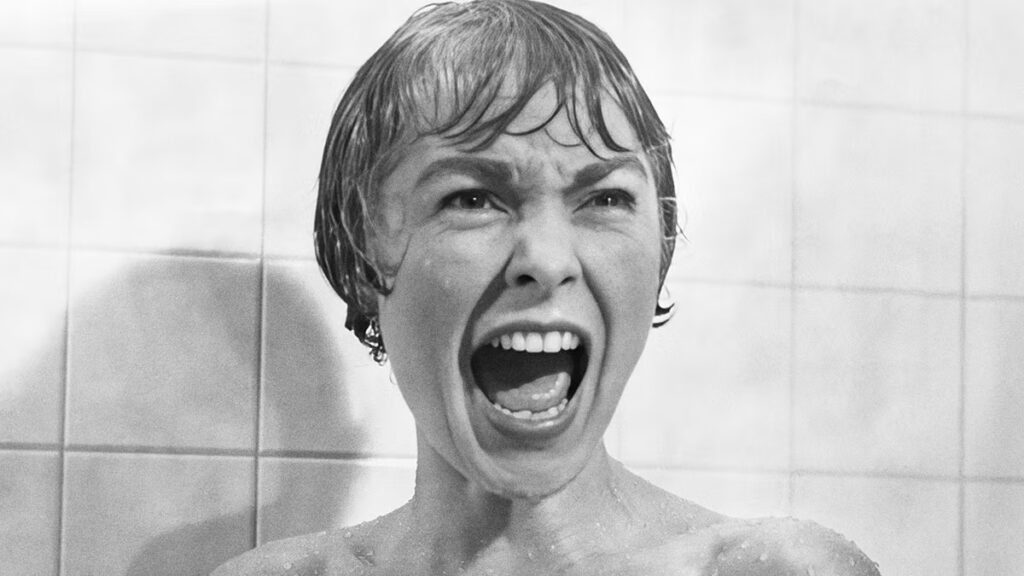
“Motorpsycho Nightmare” is written from the perspective of a weary traveler who stops at a farmhouse to rest for the night. At first, the farmer is suspicious of the traveler, interrogating him and asking if he is a traveling salesman. Eventually, the farmer allows him to stay the night – as long as he leaves his daughter, Rita, alone. He agrees, but later that night, while the traveler sleeps, Rita enters the room “looking just like Tony Perkins.” This is a direct reference to Anthony Perkins, who famously plays Norman Bates in Alfred Hitchcock’s 1960 film Psycho. Clearly, Rita is up to no good. A second reference to the horror classic comes only a few lines later, when Rita offers a shower to the weary traveler. He refuses, telling her: “‘Oh, no, no, I’ve been through this movie before.’” In this lyric, Bob Dylan is alluding to the classic shower scene in Psycho when (Spoiler alert! To be fair, its been out fornearly 70 years) the false protagonist Marion is stabbed to death. Dylan’s references to this classic film are clever and humorous, and add an element of camp to the meandering folk-rock song.
Who’s Your Perfect Classic Rock Band?
4
“The Spy” by The Doors (1970)

“The Spy” is a slow-burning, blues-forward track from the 1970 Morrison Hotel album. The song, which explores suspicion and mistrust within a romantic relationship, is inspired by Anaïs Nin’s 1954 psychological novel A Spy in the House of Love. The Doors‘ song digs into the paranoia and inclination to spy on a partner to ensure they are being faithful – the lyrics are dark and unsettling, crossing the line from caring into deeply toxic. Nin’s novel follows Sabine, a married woman living in New York City, through a series of secret affairs and trysts. She changes and hides herself in these relationships, becoming a spy as she moves from man to man, exploring her sexual freedom in a fashion usually reserved for men. The novel is deeply feminist, focusing on female autonomy and desire – so it is safe to say that Jim Morrison cannot fully relate. However, he was inspired nonetheless to write a song from his own perspective through the lens of The Spy in the House of Love.
3
“Why Didn’t Rosemary?” by Deep Purple (1969)

“Why Didn’t Rosemary?” was inspired by – you guessed it – Roman Polanski’s 1968 film Rosemary’s Baby (and Ira Levin’s 1976 novel by the same title.) In the psychological horror film, a woman named Rosemary, played by Mia Farrow, becomes pregnant (against her will) with Satan’s child. The movie is deeply disturbing, emphasizing society’s horrible treatment of women before, during, and after the time of this film’s release. Deep Purple’s song is essentially a rumination on why Rosemary didn’t use birth control to prevent the Spawn of Satan from being born into the world, featuring lyrics such as “Why didn’t Rosemary ever take the pill?/ Laying there waiting, waiting for the kill/ Oh, man won’t do it but the devil will.” The band wrote the song immediately after watching the movie together in the theater. While deeper meaning and motifs are sometimes teased from the lyrics by listeners, it seems far more likely that they simply set out to write a new song and Rosemary’s Baby was fresh on their minds.
2
“Don’t Stand So Close To Me” by The Police (1980)

Continuing on the theme of disturbing themes and content, The Police’s “Don’t Stand So Close To Me” is as creepy as it gets. The song tells the story of a young male teacher attempting to resist the temptation to sleep with a female student. The lyrics imply that he is being so brave in the face of adversity, nobly keeping his distance from the object of his affection. Now, it is abundantly clear that the messaging in this song is deeply misogynistic and loaded with victim blaming – but then again, so is the novel the lyrics reference. After the teacher is accused of inappropriate conduct, he catches a glimpse of the female student: “It’s no use, he sees her/ He starts to shake and cough/ Just like the old man in/ That book by Nabokov.” The book they are referring to is Lolita by Vladimir Nabokov, in which a professor becomes sexually obsessed with his twelve-year-old step-daughter. The book is heavily controversial, and for good reason, as the narrator paints the young girl as a seductress rather than a victim of grooming. Anyway, regardless of the intent of both the song and novel, they both have the unique ability to make the reader/listener’s skin crawl.
1
“Nebraska” by Bruce Springsteen (1982)

“Nebraska,” the titular track on Bruce Springsteen’s 1982 album, was written by Springsteen during a period of isolation in the New Jersey wilderness. During this time, Springsteen immersed himself in American film and literature, drawing inspiration from the media he consumed. He wrote “Nebraska” after watching Terrence Malik’s 1973 film Badlands. The crime drama movie, which was inspired by true events, follows a young spree killer and his even younger girlfriend as they travel through the American Heartland killing innocent people. Springsteen wrote “Nebraska,” a beautifully haunting folk song, from the perspective of the killer. Speaking through the lyrics, the killer tells his story of murder and mayhem matter-of-factly, explaining that he does not regret his actions. The final lyrics find the killer awaiting his execution and reflecting upon his brief life of crime: “They wanted to know why I did what I did/ Sir, I guess there’s just a meanness in this world.”