
Casey Chong presents a selection of must-see movies that take place over a single night…
The idea of a movie taking place within a single night feels fundamentally intriguing since it zeroes in on the characters to work out whatever matter they are facing. We have seen this in numerous movies from John Carpenter’s trapped-in-the-police-station Assault on Precinct 13 (1976) to Martin Scorsese’s darkly comedic odyssey After Hours (1985), and Michael Mann’s thrilling Collateral (2004), where Jamie Foxx’s unlucky taxi driver character is forced to drive the contract killer (Tom Cruise) to different assassination-focused destinations. Although single-night movies primarily fit well for action, thriller, and horror genres, the concept equally works well for dialogue-driven dramas. Here, we cover our selected top ten underrated single-night movies that deserve to be mentioned more.
Alphabet City (1984)
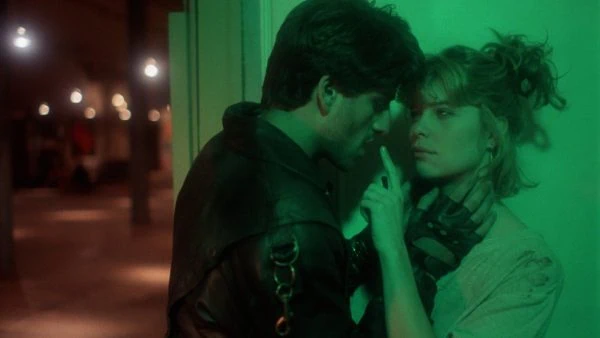
The neighborhood of New York City’s East Village is bathed in lurid neon-noir aesthetics, thanks to Oliver Wood’s mesmerizing cinematography that reflects Johnny’s (Vincent Spano) deliberate single-night urban nightmare. That night marks a turning point for Johnny, who’s been overseeing every underground operation in the titular city section for the Mafia, after he is told to burn down the tenement building. Unfortunately, his mother and sister live in that very building, leaving Johnny with no choice but to refuse his boss’s order – a result that makes him an enemy and a target.
Those expecting Alphabet City to be a race-against-time thriller might be disappointed by Amos Poe’s slow-burn direction. The movie prioritizes atmosphere over story-driven narrative, focusing more on establishing the mood and style that defines the distinct 1980s visuals, complete with Nile Rodgers’s synth-heavy score. Alphabet City also features an early performance from Jami Gertz, who would go on to star in The Lost Boys and Twister.
That Night’s Wife (1930)
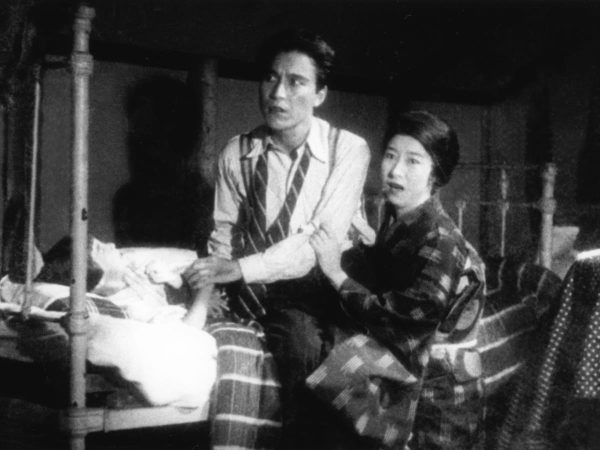
Yasujirō Ozu may be primarily known for his work, namely Tokyo Story. But he already made quite an impression directing silent film classics, one of which is That Night’s Wife. Arriving a decade before the quintessential American film noir dominated the genre, Ozu’s 1930 black-and-white film subtly blends crime thriller and melodrama, detailing a desperate family man (Tokihiko Okada’s Shuji Hashizume) who commits a bank robbery. His reason isn’t purely criminal but rather a forced circumstance of needing the money to pay for his daughter’s medicine. The detective (Tōgō Yamamoto) finds out Shuji is returning home, but instead of successfully taking him in, Shuji’s wife, Mayumi (Emiko Yagumo), holds him hostage.
From here, it may look as if Ozu would embrace the psychological battle of wits within the confined setting of Shuji’s home. But the director is more interested in exploring the humanistic angle, showcasing the detective’s otherwise dedicated sense of duty with empathy towards Shuji and his wife, despite the latter two having broken the law. The noir approach is far from the cynical outlook we often see in American noirs, trading the conflicted good vs. evil tension and nihilism in favor of a moving story of family survival and a traditional code of honor.
Self Defense a.k.a Siege (1983)
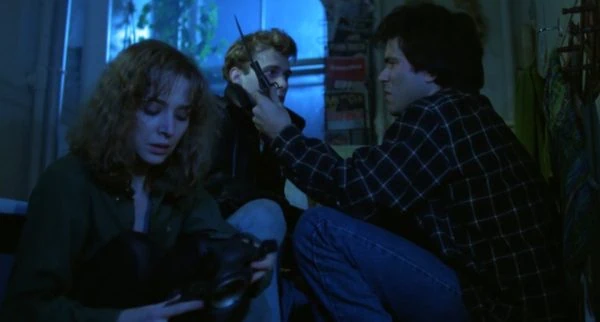
Also known as Siege, this little-seen action thriller is a Canadian answer to John Carpenter’s Assault on Precinct 13, swapping the Los Angeles police station for a Halifax apartment complex being held under siege. It all begins with Daniel (Terry-David Després), who manages to escape from the gay bar massacre and ends up hiding in the aforementioned apartment building. Led by Cabe (Doug Lennox), the group responsible for the cold-blooded murders is looking to infiltrate the building. But the residents – among them is Horatio (Tom Nardini) – choose to stand their ground, instead of giving up the person they want.
The low-budget nature of the movie is evident with the cheesy sound effects, particularly the use of the silenced guns that sound like firing laser beams. While this tends to break off the immersion of an otherwise grim and uncompromising thriller about fascism and vigilantism, Self Defense remains an underrated single-night gem. Co-directors Paul Donovan and Maura O’Connell make good use of the confined apartment-complex setting to draw tension and suspense. The residents are mostly portrayed as level-headed survivalists rather than disposable archetypes, notably Nardini’s Horatio and Barbara, played by Brenda Bazinet, as they overcome their fear through actionable plans, from barricading the building to fighting back using a mix of traditional and makeshift weapons.
Daddio (2024)

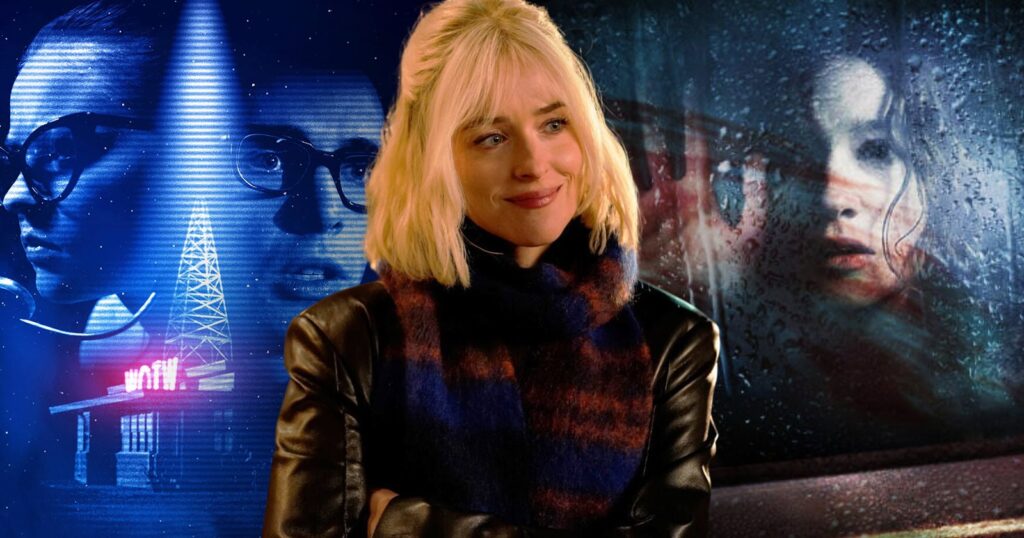
It Ends with Us scribe Christy Hall made her directorial debut in this indie drama that takes place inside a yellow cab, travelling from JFK airport to Midtown Manhattan late at night. The passenger (Dakota Johnson, sporting a platinum-blonde bob hairstyle), whose name is never mentioned, boards a taxi driven by a middle-aged Clark (Sean Penn). The journey sees Clark breaking the ice by debating various topics. This includes everything from how today’s society has gone digital to learning more about Dakota Johnson’s character background.
The dialogue-heavy narrative can make or break a movie like Daddio, particularly if it ends up being a tedious experience to sit through. Thankfully, the movie works as an engrossing two-hander since Johnson and Penn share a solid on-screen dynamic as they debate just about everything, whether casual or personal. The confined setting within the interior of a moving cab doesn’t come across as rigidly staged, thanks to Phedon Papamichael’s moody lensing that brilliantly uses light and shadow.
Wolf Man (2025)
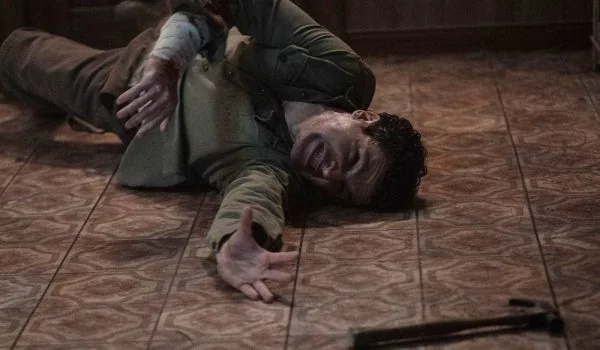
Moving away from the toxic relationship angle in The Invisible Man to a single-night survival horror in Wolf Man, director and co-writer Leigh Whannell trades the traditional werewolf lore commonly associated with the full moon for a contagious disease. The latter perfectly mirrors the terrifying real-world anxiety that Whannell and his co-writer Corbett Tuck first came up with the script during the peak of the COVID-19 lockdown.
The disease in question affects Blake (Christopher Abbott), whose nasty arm injury and bite mark on his ankle following an encounter with a creature during a late-night truck accident slowly transform him into a werewolf. Whannell isn’t interested in the old-school werewolf transformation seen in the likes of An American Werewolf in London, preferring to approach the physical mutation as a painfully deliberate yet agonizing David Cronenberg’s The Fly-like body-horror tragedy.
The Vast of Night (2020)
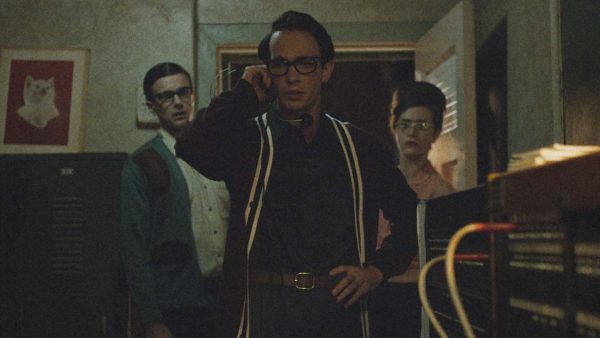
Andrew Patterson’s debut feature proves that you can make a high-concept sci-fi thriller on a budget in The Vast of Night. Set on a single night in the 1950s, the story follows two teenagers (Sierra McCormick and Jake Horowitz) who discover something strange is happening in their sleepy New Mexico town. Here, we see them spend the bulk of their time attempting to piece together the puzzle within two confined locations – one’s a switchboard, and the other is a radio station.
Patterson, who also co-wrote the screenplay, eschews effects-heavy set pieces for dread-inducing atmosphere exploring fear of the unknown and dialogue-heavy storytelling. The latter may seem like a narrative risk, but Patterson has a knack for well-written cadence; notably, the first 20-minute walk-and-talk sequence between Fay (McCormick) and Everett (Horowitz) establishes the pattern. The Vast of Night also showcases Patterson’s technical flair for utilizing long takes to his advantage. Among them is a transition sequence that takes us from the small-town location to the indoor high school basketball court and the radio station.
In Fear (2013)
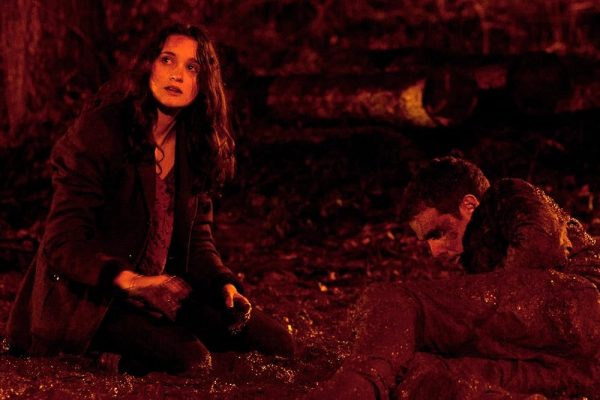
A trip to a remote hotel somewhere deep in the Irish countryside becomes an endless night of dread and terror in Jeremy Lovering’s psychological horror. Lovering, who also wrote the screenplay, follows a new couple (Iain De Caestecker and Alice Englert) as they are driving to their destination, only to find themselves lost. But despite following the sign, they seem to be going in circles as if they are stuck within the maze. In Fear prioritizes psychological dread over typical jump scare-heavy moments as we see these two characters increasingly lose their patience.
Here is where Lovering taps into the primal human fear, and of course, the blame game and relationship friction between the couple. The subsequent introduction of another character, played by Allen Leech, makes us wonder whether he’s a victim just like them or a manipulative culprit behind all this. The movie equally benefits from its lean 85-minute runtime, and Lovering proves to be the master of his craft in his feature-length debut. To date, In Fear remains his only feature film, as his work is tied to directing television projects such as Sherlock and Slow Horses.
My Dinner with Andre (1981)
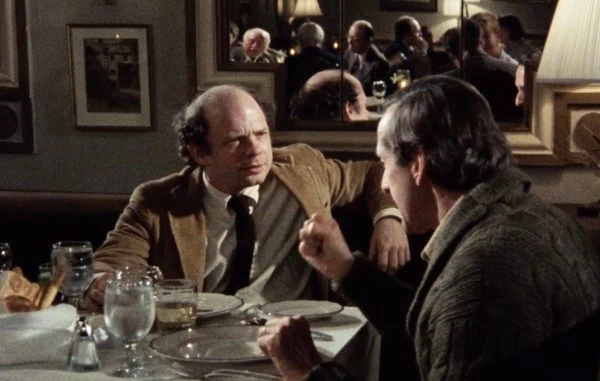
Long before Wallace Shawn voiced the nervous-wreck Rex the plastic dinosaur in the Toy Story movies, he starred in this talky drama as Wally, a struggling playwright who meets up with his old friend, theater director Andre (André Gregory), for dinner at a high-end restaurant. Directed with minimalist precision by Louis Malle, best known for his work in Murmur of the Heart and Atlantic City, the movie follows these two friends as they have long conversations over a multi-course dinner. Interestingly, Malle actually shoots the movie over several months before Suzanne Baron’s meticulous editing seamlessly puts everything together, making it look as if it takes place in real time.
The first half is predominantly dedicated to Andre recounting his colorful globe-trotting theatrical experiences, from Poland to the Sahara Desert. The movie then shifts gears when Wally goes from listening to his stories to bringing up his own experiences, debating about his fascination with the electric blanket and the simple joy of living an ordinary life. The contrasting personalities between the privileged Andre and the modest Wally are the highlight here, coupled with their consistently engaging dialogue that doesn’t overstay its welcome even when the movie clocks in at nearly two hours.
Mikey and Nicky (1976)
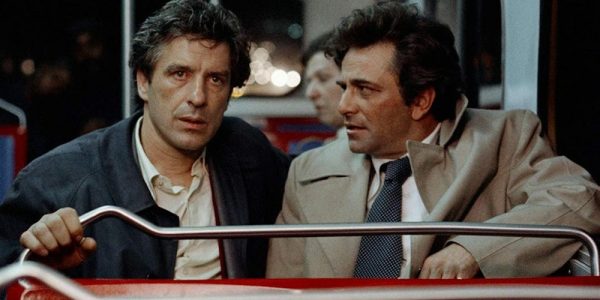
A box-office fiasco at the time of its release, the Mikey and Nicky in question refers to the two childhood friends, played by Peter Falk and John Cassavetes. The story begins with Nicky, who’s been lying low in a dingy hotel room after stealing his mob boss’s money, calling his friend Mikey. Apparently, his ill-advised action makes him a target when he learns there’s a contract for his life.
Writer-director Elaine May keeps the tension running throughout a long, single-night scenario as Mikey tries his best to help the increasingly paranoid Nicky. She brings out the best in Falk and Cassavetes, and the fact that they are real-life best friends makes their on-screen dynamic more dramatically urgent and tangible. May also doesn’t shy away from the pessimistic reality of living in fear surrounding Nicky’s plight as a targeted low-level mobster. There’s no romanticization whatsoever in her movie, even going as far as deconstructing the brotherhood angle between Mikey and Nicky, where the so-called code of honor and loyalty is merely wishful thinking. Not surprisingly, the movie culminates in a bleak ending that’s best described as agonizing and tragic.
The Set-Up (1949)

Here’s an underrated single-night masterpiece that it’s hard to believe that The Set-Up only runs 73 minutes. And yet, the shorter-than-usual runtime drives the story’s ticking-clock structure right from the start, focusing on the over-the-hill boxer Bill “Stoker” Thompson (Robert Ryan), who believes he can take on the younger opponent, even though his wife (Audrey Totter) can’t bear to see him getting hurt. The movie then spends its time with Stoker, waiting for his turn in the locker room as other boxers come and go from the arena.
The title in question actually refers to Stoker being set up to take a dive in the match. Except that the irony is Stoker remains clueless about it, but his manager (George Tobias) doesn’t bother to inform him, believing he has no chance of winning. Robert Wise’s razor-sharp direction does a great job of tracking his movie simultaneously between Stoker’s waiting game in the locker room and his worrying wife’s aimless stroll around the streets.
And when the time finally comes, Wise doesn’t back down on the raw brutality of the boxing sequence. The fight between Stoker and Hal Baylor’s Tiger Nelson is filmed with genuinely visceral realism, and it helps that these actors had prior real-life experience as boxers. The Set-Up is equally pragmatic about the nature of this contact sport, stripping away its glory by shifting focus between the brutal boxing fight and the crowd of spectators who only care about entertainment and violence.
What are your favourite movies set on a single night? Let us know on our social channels @FlickeringMyth…
Casey Chong