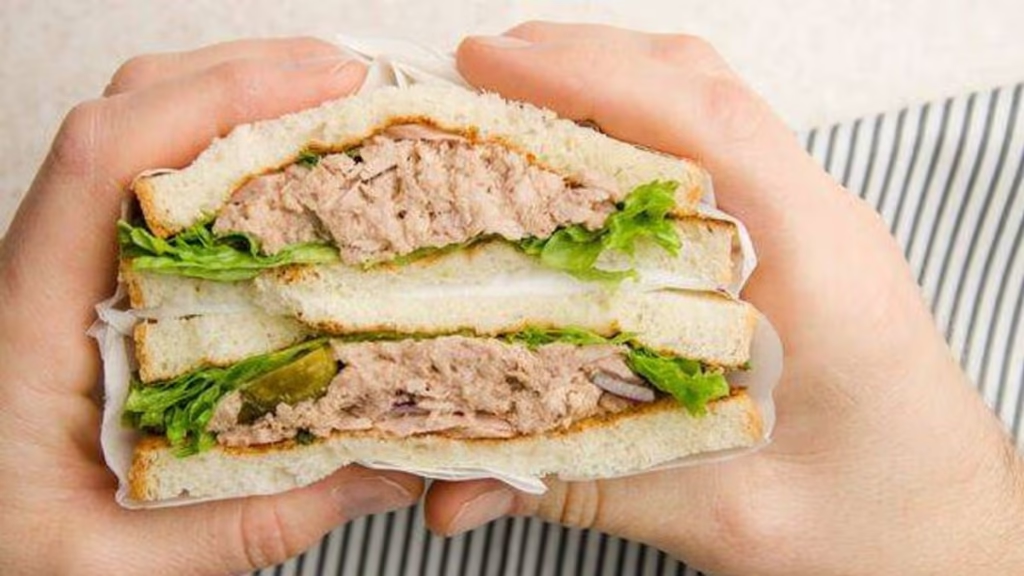

Plenty of people love tuna – but one unusual taste could spell disaster.

Tuna is a kitchen staple for countless households(Image: icetocker via Getty Images)
Tuna is a kitchen staple for countless households. It’s swift and convenient to prepare a sandwich, sear a steak or simply tip a tin over rice for a rapid lunch.
Nevertheless, experts are warning people to watch out for a telltale sign that your tuna may be contaminated by bacteria capable of causing illness. If you bite into tuna and detect a peppery flavour when you haven’t added chilli, cease eating it straight away.
Julian Klenda, seafood expert at Maine Lobster Now, explained: “If you haven’t added pepper or chilli and your tuna suddenly tastes peppery or burns your mouth, stop eating it.
“Don’t take another mouthful to check, and don’t ask somebody else to taste it for you.”
The tuna might also have a metallic or sharp flavour — this indicates histamine poisoning, otherwise known as scombroid poisoning. It develops when tuna or mackerel are stored at excessively warm temperatures.
This converts histidine — a naturally occurring amino acid present in fish — into histamine.
It’s this histamine which can cause people to fall ill. Julian said: “People expect bad fish to announce itself with a horrible smell, but that isn’t a dependable safety check. An unexpected burning taste is a reason to stop. A normal taste is not proof that everything is fine.”
The signs of histamine poisoning include:
- Headaches
- Sweating
- Dizziness
- Rapid heartbeat
- Rashes
- Nausea
- Vomiting
- Diarrhoea
Neither cooking nor freezing the tuna will eliminate the histamine poisoning — it must be discarded. Julian said: “An intact, properly processed tin can be stored in the cupboard as its label directs.
“Once you open it, though, you need to follow the instructions for refrigerated storage. That long best-before date no longer tells you how long the opened tuna will keep.”
It is advisable to transfer any unused tinned tuna into a covered container and store it in the fridge at a temperature between 0°C and 5°C. Properly chilled leftovers should be consumed within 48 hours, or earlier if the label stipulates so.
If you’re preparing a tuna sandwich to take to the office in the morning, ensure it remains cold until you’re ready to eat. Julian said: “Your tuna sandwich needs to stay chilled on the commute as well as at. Use an insulated lunch bag with an ice pack and put it in the fridge when you arrive. Leaving it on your desk until lunchtime gives it hours to warm up.”
Should you consume tuna that tasted questionable, it isn’t necessarily a medical emergency. However, if you notice sudden swelling of your lips, mouth, tongue or throat, dial 999 without delay.
Julian said: “Don’t let the price of the fish or the thought of wasting lunch persuade you to finish it. If an unexpected taste makes you stop, leave it there. Another mouthful is not a safety test.”