
Editor’s note: The following contains spoilers for Atonement.
Summary
- ‘Atonement’ reframes the Iraq War through an intimate, emotionally rare portrait of humanity.
- Lou D’Alessandro’s return home shows raw guilt, PTSD, and the hard work of seeking forgiveness.
- Filmmaking is intimate and demanding, and this shoot included deep prep, an intense rooftop shootout, and a reverence for veterans.
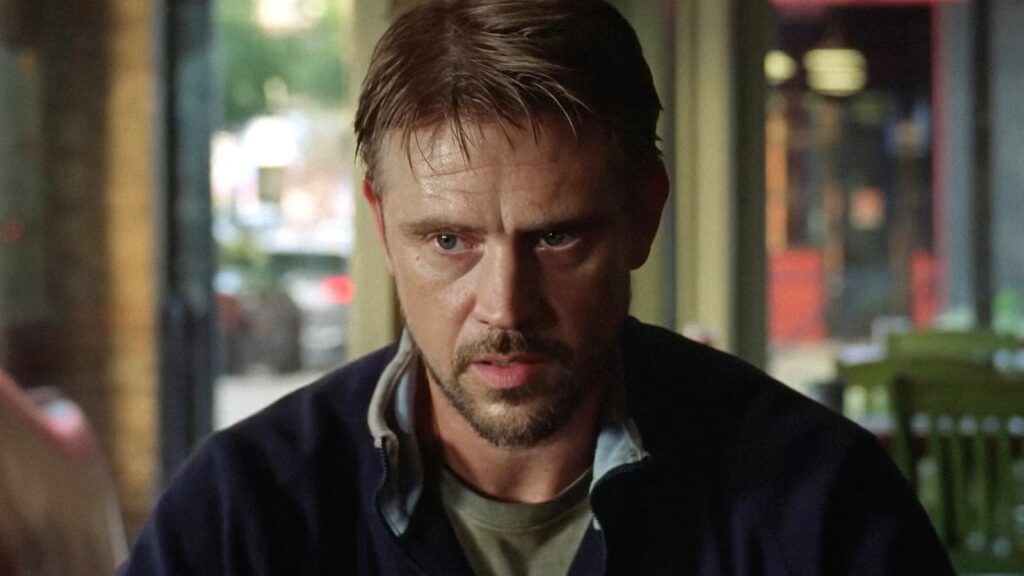
From first-time feature writer/director Reed Van Dyk, the war drama Atonement is set in 2003 when bombing erupts, and the Khachaturian family decides to navigate the war-torn streets of Baghdad Iraq to return to their home. Trapped in a massive firefight between U.S. Marines and insurgents, the family’s life is forever shattered. Years out from that moment and former Marine Lou D’Alessandro (Boyd Holbrook) still can’t move past that tragic incident, so he decides to reach out to the New Yorker journalist (Kenneth Branagh) that was there covering the war to arrange a meeting with Mariam (Hiam Abbass) and her remaining family. Somewhere among the need for redemption and forgiveness, Lou is able to just sit and have a quiet moment with Mariam as love continues to go on around them.
Collider recently got the opportunity to chat with Holbrook about why this approach to telling the story of the Iraq War appealed to him and why he thought it was a once in a lifetime type of role. During the interview, he discussed how making this film felt similar to doing A Complete Unknown, bonding with the team of soldiers, the challenges of filming the rooftop shootout, trying to process what it would be like for Lou after he’d returned home, his experience working with Branagh, the meaning of the film’s ending, and why he decided not to meet the real Lou. He also talked about losing nearly 50 pounds for his next project, Last Meals with Mads Mikkelsen, joining The Morning Show for Season 4 and 5, making Mercenary: An Extraction Series with Omar Sy, and why likes to keep shaking things up.
Boyd Holbrook Knew ‘Atonement’ Was a Once in a Lifetime Project
“I don’t feel like we’ve seen the Iraq War portrayed in this way, with the different effects of war.”

COLLIDER: Anytime you watch a more recent war film, you always wonder what it’s going to be, and this is definitely a very different version of a war film. What did you find most interesting about this approach? How did you find the experience of reading the script for the first time and figuring out how to make that work?
BOYD HOLBROOK: To Reed [Van Dyk]’s credit. He had just taken such a particular perspective, especially with structuring the script the way he has. I remember reading it and just being so moved by it. Having read so many scripts, what the film emotionally climaxes to is just so rare, and I knew that. I knew that this was probably a once in a lifetime type of part. I was blown away. Like you said, there are many perspectives to be had, but with this particular story, I don’t feel like we’ve seen the Iraq War portrayed in this way, with the different effects of war. We’ve just never seen this from such an intimate place. I remember talking to Reed when we first had the meeting and I thought, “Wow, how do you do that? This is incredible to read, but how do we actually physicalize this and make this into a film? How do you build a performance? For me, I have so much admiration and respect for men and women who serve our country. There’s a duty to the story, but you also really want to get it right. It’s such a delicate game in so many ways.
And so, I was terrified in one way, but that’s also the exciting thing about being an actor. I’m a performer. I put stuff together. And that was exciting. I was like, “How do you do that?” I felt a similar way when doing A Complete Unknown. There are certain days in the schedule that you know these important scenes are going to happen, and you have to be prepared to be ready for that day. There’s such a hyper naturalism of performance that this had to be lived in rather than put on. It really needed to come from an internal place.
Reed Van Dyk is technically a first-time filmmaker with this feature, but he’s also someone that spent a lot of time on this.
HOLBROOK: Yeah, you’re right. Everybody hears the stories of how long these projects take to get together, and it really has been a long journey, but he kept working on this. You need to have something to seriously latch onto and keep working on to give you the endless energy to keep going.
Especially for the war portion of this, when you do something like that and you’re working with a team of actors that are all wearing the same uniform, does it force you to think of each other as a team and as a unit? Does that do some of the bonding for you?
HOLBROOK: Yeah, absolutely. There’s not a lot of glitz and glam to actually making a film. You’re in the same hotel with everybody, you ride in the same cars, and you eat breakfast, lunch and dinner together. You get to know people pretty intimately. I met Hiam [Abbass] on the first day and got to learn about her children. That made shooting those sequences, when we got to the second half of the feature, so important to the fabric of those characters.
What was it like to shoot the whole shootout? There were a lot of soldiers in that scene and there was a lot of shooting going on. What were the biggest challenges in shooting all of that?
HOLBROOK: We were on a rooftop. It was so deafeningly loud. We were in this neighborhood where some people didn’t really know what we were doing, and some people did know what we were doing and we had permits. We were in a foreign country. It was exhausting. We were doing it in the dead of summer, so it was 108 degrees out. I was just listening to Reed and working with him and moving through those sequences, relying on the prep that we did for each step and making sure that we were portraying these characters’ stories appropriately.
We Can Never Do Enough for the Men and Women Who Serve This Country
“We all need to have the respect and obligation to those people to do everything that we can.”

Was there anything that you did to gain a better understanding of what life would be like for this guy after he returned home?
HOLBROOK: To be honest with you, we can never do enough for the men and women who serve this country. We all need to have the respect and obligation to those people to do everything that we can. I don’t think we can ever do enough because of what they’re doing for us. It’s a complex situation. Obviously, things have improved since 2003 and 2005. We’ve come a long way. Once Lou is home, I found out how much courage and bravery it takes. There’s this internal vibration shock that’s happening in Lou and he doesn’t really understand what’s happening because he doesn’t know who to talk to. It’s hard to process. That finally backs him outside of that club before he takes off. Coming from rock bottom and then clawing your way up and figuring it out yourself, I just found that to be such a pure, honest look at things. It goes back to this thing of what film is. Film is here to investigate ourselves, in a way, and I think this film does that really beautifully.
What was it like to figure out how you wanted Lou to come across in the second half of this film for the scenes when you guys are just sitting down and talking together?
HOLBROOK: Lou is listening and absorbing. It’s part of his process in terms of repairing and figuring out what’s happened, and more importantly, where does he go? What I think is interesting is that there are consequences no matter what. There are consequences if you don’t deal with them and there are consequences if you do. That’s really what’s interesting about watching this. You see him fumbling but making the effort to pick himself up from the bootstraps. What’s happened has happened, and he takes that, but how does he move forward with that?
Kenneth Branagh will always have a soft spot in my heart for being responsible for me falling in love with the works of Shakespeare. I could not connect with them when I was reading them, until I saw his films and understood the stories on a whole other emotional level. What was it like to work with him on this? Did you guys get to hang out at all, outside of work?
HOLBROOK: Kenneth is one of the greatest actors, writers, and directors working today. When he came on board, everyone was like, “What? Sir Kenneth Branagh is going to be in our film? Are you sure? There’s not another Kenneth Branagh?” To his credit, he really loved just being an actor. Anytime he got a note, he was just, “Yes, sir. Yes, sir.” He’s just the most humble, easygoing person to work with. And the work that he does in this is so good. It’s so different from some of the bigger performances that he’s done. I think what he’s doing in this film is equally as hard, but effortless for Kenneth.
“In war, no one wins, we all lose something.”
After Lou and Michael leave Mariam’s home, your characters have to return because Michael can’t find his key and you all have to look for it. What’s the significance of that moment? Did you have conversations about why that was where the story would end?
HOLBROOK: Yeah. I think it would have felt a little wrong departing from the door and that moment. You can look at it as a metaphor or as a bigger commentary on what we’re all trying to find. There have been questions and comments in the Q&As (after screenings), and I think it’s about how in war, no one wins, we all lose something. And life will go on, with or without you. You see all these people really reaching for life to go on, no matter how difficult or awkward or hard it is to have these conversations. But they all chose to do that, and I found that extremely fascinating.
Why did you decide not to meet the real Lou D’Alessandro?
HOLBROOK: You might think that I would, but Reed had done so much research, and I did have hours and hours of audio. There was a point that I thought about doing his voice and meeting him and going in that direction, but I just kept looking for the truth in the script. Lou and Mariam lived their lives to give us this story, and I wanted it to be truthful in terms of telling the story, not accurate in mimicking them. This is a powerful story, and I needed to tell the story.
Boyd Holbrook Has a Few Upcoming Projects To Keep an Eye Out For
“I have the fifth season of ‘The Morning Show’ coming up.”

Do you know what you’re going to be shooting next?
HOLBROOK: Right now, I’ve lost a ton of weight. I’ve got a thing coming up with Mads Mikkelsen (called Last Meals) with (director) Ramin Bahrani. I’ve lost 46 pounds so far, so I look a little haggard, but I’m fine. That’s my next film that’s scheduled. I did a Craig Zobel film with Melissa McCarthy (called Turpentine). And then, I have the fifth season of The Morning Show coming up. We just wrapped that.
It’s not easy to lose that much weight like that.
HOLBROOK: No, it’s not. What I love about being an actor is that you have the opportunity to do these different things. I’m just not really good at doing the same thing, over and over again.
What was it like to join The Morning Show in Season 4? Is it a bit of an adjustment to jump into a show that’s already been going for a few seasons and find your groove with it?
HOLBROOK: Yeah, absolutely. It’s like, “How do I squeeze my butt into these chairs?” But then, the great thing about the character is that he really does push his way in. He’s a livewire. He’s very outspoken and he loves to poke the bear. I just lean into it. I don’t really think he gives a dang about what people think about him. That’s honestly very refreshing to distill. It’s like, “I’m going to be here whether you like it or not.” Working with those people, that’s been one of the best experiences I’ve ever had.
Did it feel different going back for Season 5, after you had finished a season and you had a sense of who he was?
HOLBROOK: Absolutely. I felt like I had a little more swagger. Also, they did so much great writing for this season. I had to earn my keep a little bit and had even more fun this last time around.
You also have Mercenary: An Extraction Series coming out on Netflix with Omar Sy, right?
HOLBROOK: Yeah, that’s coming out too.
What most appealed to you about that project and about working with Omar Sy?
HOLBROOK: Omar is a phenomenal guy. That guy has an aura. He is cool. It’s a very different character for me with a lot of cool things. It’s like doing a musical, or something like that. It’s like, “Okay, no more of that for a while. I need something completely different.” Our stunt coordinator had us doing all the John Wick type of stunts. It’s going to be big. It’s going to be fun.
How would you describe the type of action and level of action in that?
HOLBROOK: It’s gun jujitsu. It’s close quarters combat. There will be amazing stunts, but really up close and personal and really intricate.
Atonement is now playing in theaters.

- Release Date
-
October 2, 2026
- Runtime
-
118 minutes
- Director
-
Reed Van Dyk
- Writers
-
Reed Van Dyk
- Producers
-
David M. Wulf, Tim White, Wayne L. Rogers, Trevor White