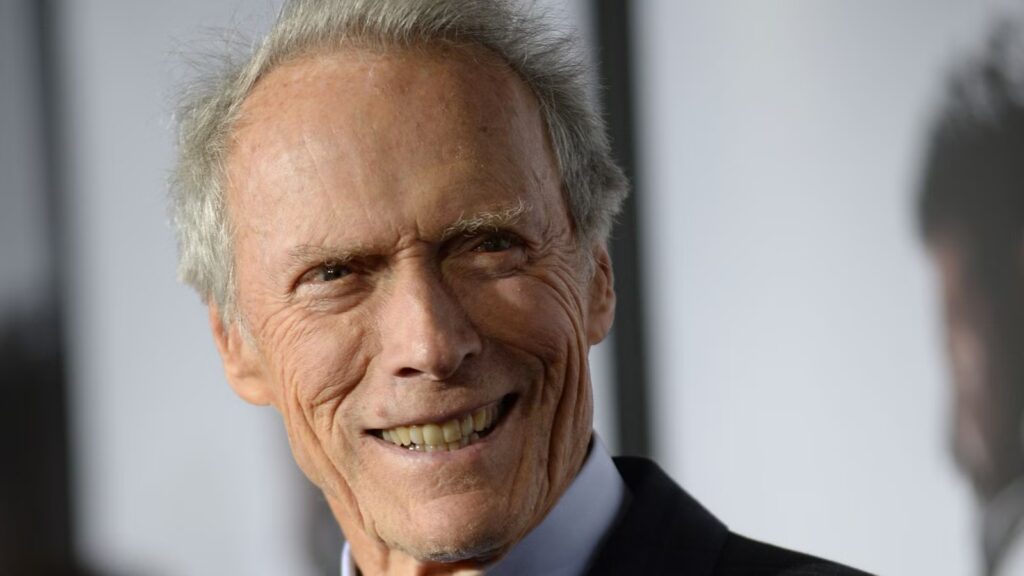

Clint Eastwood has made some of the greatest Western films of all time. He starred in Sergio Leone’s classic Dollars Trilogy and directed and starred in the fantastic The Outlaw Josey Wales (1976). I’ve always been partial to High Plains Drifter (1973), where his atmospheric direction and stoic performance added a supernatural element to a revisionist revenge story that subverted traditional Western values. Still, he’s best known for his Academy Award-winning film Unforgiven (1992), which won Best Picture and Best Director for Eastwood. He was also nominated for Best Actor, but did not win despite an impressive performance as retired gunslinger William Munny.
Unforgiven is praised as a masterpiece that continued Eastwood’s fascination with deconstructing Western tropes. I argue he has explored these same ideas in later projects, even if they weren’t overtly billed as Westerns. Gran Torino may not seem like a typical action thriller, as it leans more toward a quiet crime drama punctuated by intense moments. Yet through the lens of a neo-Western, you can see how the gritty urban tale becomes a story of frontier justice through a reluctant, aging gunslinger. Beyond the genre parallels, the 2008 film weaves in the lessons Eastwood learned over decades of crafting impeccable Westerns.
‘Gran Torino’ Isn’t Just a Great Western, It’s Clint Eastwood’s Magnum Opus
-
 Warner Bros./Courtesy Everett Collection
 -
 Warner Bros./Courtesy Everett Collection
 -
 Warner Bros./Courtesy Everett Collection
Eastwood directs and stars as Walt Kowalski, a rough-around-the-edges Korean War vet who lives by an old-school code of honor. He’s not the most likable character, expressing bigoted beliefs and having strained relationships with his grown children. Walt’s wife has recently passed away, adding to his angry demeanor. From the start, he sets himself apart from the community, seeing changes as disrespectful to tradition. In his eyes, Walt follows the rules and will enforce them himself if needed. This perfectly establishes the character as a lone outsider with a town to protect.
Walt’s prized possession is his mighty steed, a pristine 1972 Ford Gran Torino. He keeps a watchful eye on the car, which lets him catch Thao trying to steal it during a gang initiation. Thao and his family are Hmong immigrants living next door, and they make Thao help Walt as punishment, opening the door to cross-cultural connections that soften the grumpy older man’s hard exterior. Eastwood delivers an impressive performance as Walt becomes a mentor, with Thao humbling his neighbor along the way through humility and understanding. Their bond grows so strong that Walt becomes a pseudo-father figure to Thao and his sister Sue, stepping up to protect them when needed.
With a dangerous gang still threatening Thao, the stage is set for Walt to become a protective neighborhood gunslinger. He may not have a six-shooter strapped to his hip, but Walt wields a classic military weapon, the M1 Garand rifle, ready to aim when neighbors are threatened. He is one of the few who stands up to the gang, even though its members are younger and outnumber him. With the action centered in his neighborhood, Gran Torino establishes Walt’s street as the main thoroughfare of an Old West town.
The movie builds suspense toward a classic good-versus-evil showdown with a Western hero making one final stand against a rival gang. Walt prevails by subverting expectations, which speaks volumes in service of his redemption arc. He isn’t perfect, but through dialogue and understanding, Walt overcomes deep-seated prejudices in an emotionally moving story that balances dark elements and moments of genuine humor. In the end, Gran Torino is the perfect culmination of Eastwood’s career, serving as a neo-Western that outshines his earlier work thanks to an exceptional screenplay and his stellar performance.