
Corporate America has a long history of paying absurd amounts of money to steal superstar executives from competitors.
In 2011, JCPenney gave Ron Johnson nearly $53 million in special stock to lure him away from Apple, where he was Senior Vice President of Retail and had spent 11 years building the Apple Store operation from scratch, and make him CEO of the entire department-store chain. CPenney itself disclosed that he forfeited about $80 million of near-term Apple equity to take the job.
It turned into one of the most infamous CEO hires in retail history. Johnson was fired after just 17 months, after JCPenney’s sales plunged and its stock lost roughly half its value. JCPenney eventually filed for Chapter 11 bankruptcy in May 2020. Meanwhile, the roughly $80 million in Apple equity Johnson walked away from to take the job would be worth on the order of $2 billion today if it had vested and simply been held.
A year later, Yahoo recruited Marissa Mayer away from Google to become President and CEO. The turnaround never restored Yahoo to its former dominance. Five years later, Yahoo’s core operating business was sold to Verizon for roughly $4.48 billion. During her five years at Yahoo, Marissa’s total compensation, including salary, stock, and bonuses, was $405 million.
In 1995, Disney lured Michael Ovitz away from Creative Artists Agency, the powerhouse talent agency he had co-founded 20 years earlier, to become president and Michael Eisner’s clear heir apparent. Disney’s offer included a $1 million salary and options on five million Disney shares that were valued at roughly $110 million. The arrangement was considered so extravagant that it eventually became the subject of years of shareholder litigation. Ovitz lasted just 14 months and ultimately realized about $109.3 million from cash severance and stock-option profits.
In 2015, Google paid Ruth Porat roughly $70 million in signing and equity compensation to leave Morgan Stanley and become its CFO. Ruth remains at Google today, where she serves as the company’s Chief Investment Officer.
In 2017, Uber needed a grown-up to take over from founder Travis Kalanick, who had resigned as CEO amid a spectacular series of scandals. The company dug deep and recruited Dara Khosrowshahi away from Expedia, where he had spent 12 years as CEO. Khosrowshahi was walking away from roughly $184 million in unvested Expedia stock options, so to get him to jump ship, Uber had to pony up a $200 million pay package.
To be clear, these weren’t ordinary employees plucked from obscurity. These were superstar executives being paid extraordinary sums to run entire companies. Their compensation packages were so enormous that some triggered years of shareholder controversy and litigation.
But all of these deals have one other thing in common: They happened before corporate America came down with an extremely serious case of AI psychosis.
Case in point? Wait until you hear what Facebook was willing to offer ONE AI researcher you’ve probably never heard of just to get him in the building.
And even with a potential compensation package unlike anything corporate America had ever seen for a rank-and-file employee, he lasted just 11 months.

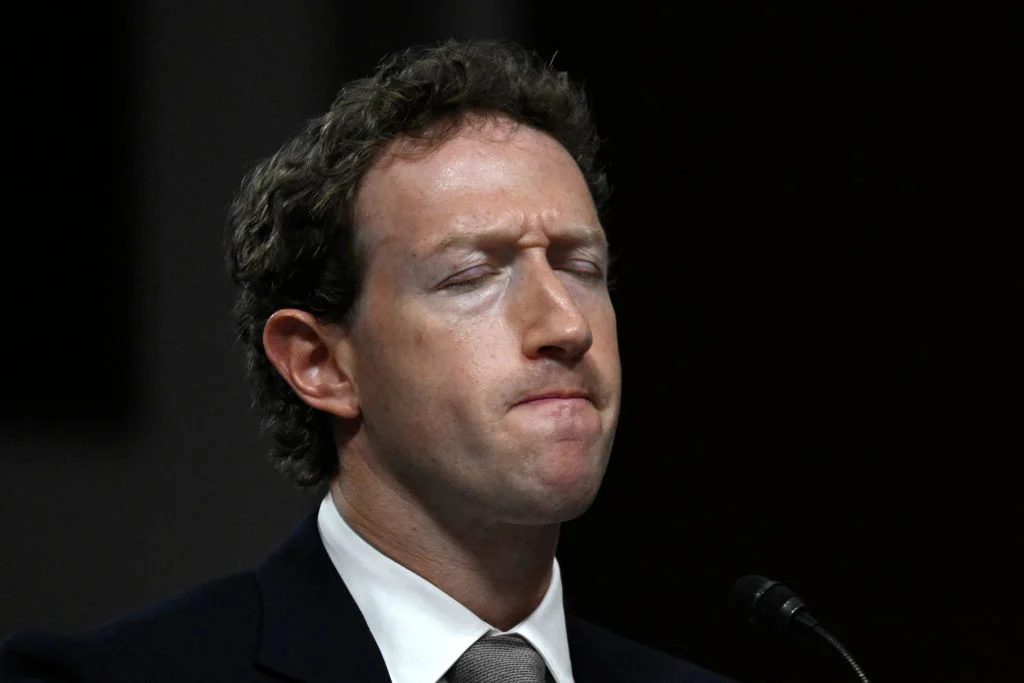
(Photo by ANDREW CABALLERO-REYNOLDS/AFP via Getty Images)
The $1.5 Billion Employee
If you are a normal person, you almost certainly have not heard of Andrew Tulloch.
Tulloch is an Australian-born AI researcher and engineer who had already spent 11 years at Facebook before leaving in 2023 for OpenAI. He later became one of the co-founders of Thinking Machines Lab, the artificial intelligence startup launched by former OpenAI chief technology officer Mira Murati.
But within the small world of elite artificial intelligence researchers, Tulloch had been considered a superstar for years.
Here’s a fun example.
Back in 2016, OpenAI was still a tiny research organization trying to assemble its original team. OpenAI president Greg Brockman was attempting to recruit Tulloch and discussed the situation in an email with Elon Musk, who was one of OpenAI’s co-founders.
At the time, Tulloch was earning around $800,000 per year at Facebook. OpenAI was offering new researchers a $175,000 annual salary plus a $125,000 annual bonus, for total potential compensation of around $300,000.
Tulloch was intrigued, but there was a problem. Taking the job would mean accepting a roughly $500,000 annual pay cut.
He stayed at Facebook.
Nine years later, $800,000 per year would look like pocket change compared with what Facebook was willing to pay him.
By 2025, Silicon Valley’s biggest companies were no longer merely competing to build the best AI models. They were fighting over the relatively tiny collection of researchers believed capable of pushing those models forward. And Facebook — technically, the parent company has been called Meta Platforms since 2021, but we’re talking about Mark Zuckerberg’s Facebook — was spending enormous amounts of money trying to catch up.
Zuckerberg wanted Tulloch back. Badly.
The Offer
According to The Wall Street Journal, Facebook offered Tulloch a compensation package that, under the most lucrative possible scenario, could have been worth as much as $1.5 billion over at least six years.
Again: $1.5 BILLION.
Divide that evenly across six years, and you’re looking at headline potential compensation of roughly $250 million per year.
For perspective, just nine years earlier, Tulloch was making around $800,000 per year at Facebook. On an annualized basis, the maximum potential value of the new offer was more than 300 times his reported 2016 compensation.
Assuming a standard 260-workday year and an eight-hour workday, $250 million per year works out to roughly $961,500 per workday, or around $120,000 per hour.
That’s roughly $2,000 every minute he was on the clock.
And Tulloch’s response to all of this? No thanks.
Tulloch initially rejected Facebook’s offer and remained at Thinking Machines Lab.
But Facebook kept trying.
A few months later, in October 2025, Tulloch changed his mind and agreed to return to the company where he had previously spent more than a decade.
The terms of the deal he ultimately accepted were never publicly disclosed. Whatever Facebook finally offered, it was enough to pry one of Thinking Machines Lab’s founders away from one of the hottest AI startups in the world.
For a while.
Tulloch joined Facebook’s new AI operation in October 2025. He worked inside the company’s TBD Lab, which sat at the center of Zuckerberg’s enormous push to make Meta a leader in artificial intelligence.
The effort was being spearheaded by Mark Zuckerberg and Scale AI founder Alexandr Wang, whom Meta had recruited as part of its broader AI overhaul.
Facebook spent the following months throwing enormous resources at the problem: researchers, computing infrastructure, new models, new products, and compensation packages that would have sounded completely absurd even by Silicon Valley standards just a few years earlier.
So how long did Andrew Tulloch last after Facebook finally convinced him to come back?
11 Months
Earlier today, Tulloch told colleagues he was leaving. His second stint at Facebook had lasted roughly 11 months.
We don’t know why. Tulloch hasn’t publicly announced his next destination, and neither he nor Meta has disclosed the specific reason for his departure.
But what possibly could be going on for someone to give up potentially $1 BILLION in compensation? Maybe he got a better offer? Maybe he just wants to retire? Maybe he hated being at Facebook?If that’s the case, imagine how Facebook feels. An employee is willing to leave a job that could pay $1 billion? Not a good look. Anyhoo, since that job is now available, if Facebook HR is reading this, I am available for hire.
UPDATE: Well, that didn’t take long. A day after we wondered whether Andrew Tulloch was leaving Facebook because another AI company had made him an even crazier offer, The Wall Street Journal reported that Tulloch is joining… Anthropic. I bet he didn’t come cheap.