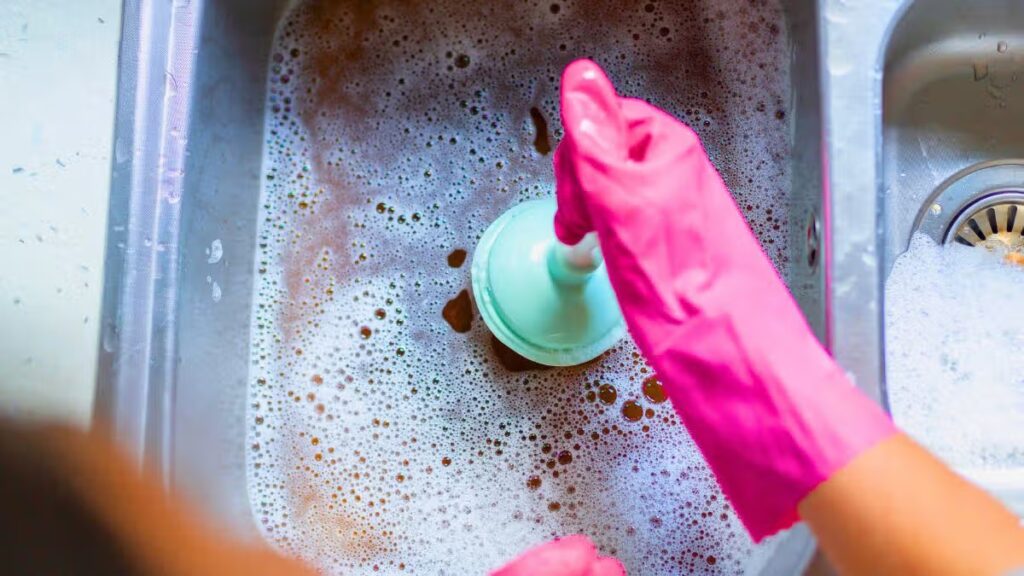

If you keep using vinegar and baking soda to try and unblock drains, there may be a kitchen item that will be more effective and is likely already sitting next to your sink.

(Image: Getty)
If you’ve noticed your sink making odd gurgling noises or draining at a snail’s pace, chances are there’s a minor blockage lurking – but the good news is it’s often straightforward to sort using household staples. Typical culprits behind sink blockages include grease from cooking, oil, or soap residue slipping down the plughole, gradually accumulating into a sticky film that adheres to your pipework.
A quick online search for tackling sink clogs will throw up countless recommendations for vinegar or bicarbonate of soda, but while these pantry heroes work wonders for general cleaning tasks, they’re not particularly brilliant at shifting that greasy gunk. Before reaching for the phone to ring a plumber, though, Harrison Kral from Family Handyman reckons there’s a surprisingly simple solution using something that’s probably sitting by your sink right now.
Harrison explained: “Grease can easily congeal in pipes and clog a sink drain, causing a whole host of issues. To break up a grease clog, attack it with something you likely have sitting right next to your sink – dish soap.”
How can washing-up liquid unblock a sink?
Grease proves tricky to shift because it’s hydrophobic – essentially, it repels water – meaning most standard cleaners struggle to budge it once it’s lodged in your drain.
That’s where washing-up liquid comes into its own, as it’s specifically formulated to cut through food residue on your dishes and works just as effectively on pipes thanks to surfactants that break down grease.
Washing-up liquid can work wonders on a blocked drain by dissolving greasy clogs into tiny droplets, transforming them into a liquid form that becomes easier to shift, allowing water to flush it through.
Reaching for the washing-up liquid is among the quickest and most budget-friendly methods to tackle a blocked sink, without resorting to aggressive chemical drain cleaners.
Can you use vinegar or baking soda on a blockage?
Online, you’ll often find vinegar and baking soda touted as drain-clearing heroes, thanks to the bubbly fizz they produce when combined – a reaction that’s handy for shifting some household stains.
However, this fizzing spectacle can be misleading when it comes to tackling drain grease, as neither ingredient packs enough punch to break down the blockage effectively.
At most, vinegar and baking soda might shift a bit of loose debris within your pipes, but you’re likely better off saving yourself the hassle and opting for washing-up liquid from the start.
How to quickly unclog a drain
Simply fill your kettle and bring it to the boil. While waiting, clear away any water sitting in the sink.
Gently pour the boiling water down the plughole – the heat will start softening the greasy build-up. Next, squeeze a good dollop of washing-up liquid into the drain.
Allow the washing-up liquid roughly 10 minutes to travel down the pipe and reach the obstruction. When the time’s elapsed, boil a fresh kettle and once more carefully pour the hot water down the plughole.
The pairing of boiling water with washing-up liquid ought to help dissolve and clear away any oily build-up.
For particularly persistent blockages, you might find yourself needing to go through the process several times, though for less severe grease-related clogs, this approach should suffice to restore normal drainage to your sink.