
George Lucas made the Star Wars films with 20th Century Fox – but went elsewhere for Indiana Jones. There were reasons.
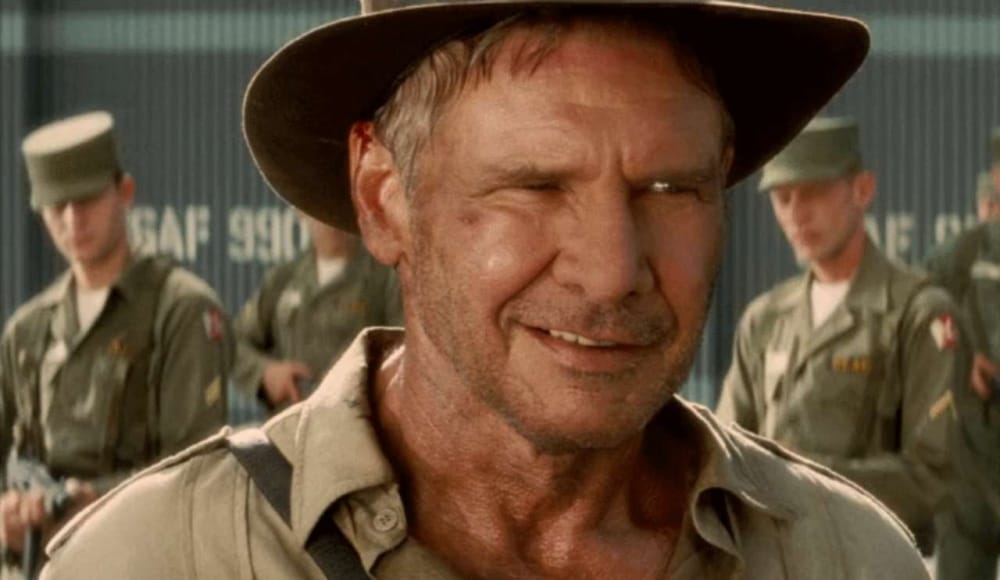
With box office returns amounting to around $2.5bn, before you factor in the home format sales, the spin-offs, the TV show and the assorted videogames, Indiana Jones has, I’d suggest, been a rather successful franchise.
Sure, the last film was ‘challenging’, but for Messrs Harrison Ford, George Lucas and Steven Spielberg, it’s been a wildly successful part of their lives for over four decades.
Inevitably though, Indiana Jones was one of those projects that was at its most vulnerable right at its infancy. Originally going by the name of Indiana Smith, the character was dreamed up by George Lucas, looking to capture the feel of the Saturday morning serials he’d loved so much growing up. He offered what became Raiders Of The Lost Ark to Steven Spielberg to direct, and the rest to a degree is history.

Going back to 1981 and the release of Raiders Of The Lost Ark, it would give Paramount Pictures the top grossing film of the year at the US box office. For 20th Century Fox meanwhile, its top performer was The Cannonball Run, doing a third of the money.
Yet Raiders Of The Lost Ark so easily could have been a Fox production. A moment during the production of The Empire Strikes Back would cost it the movie, and subsequently, the franchise.
George Lucas, famously, couldn’t find a studio to back his plan for a film called The Star Wars, until he met an executive at Fox called Alan Ladd Jr.
‘Laddie’, as he was known’ (and there’s a smashing documentary on him), didn’t quite understand what Lucas was pitching him, but also recognised the genius of the man in front of him. It helped that Lucas had just hit box office gold with American Graffiti, and while every other studio in town said no, Laddie agreed to take a chance. He, and Fox, would be heavily rewarded for that gamble.
Also famously, nobody really expected Star Wars to become what it became, and thus Lucas was able to get merchandising and sequel rights as part of his deal for the movie. It was a moment that bought him independence, and also meant that he could fund The Empire Strikes Back independently. Right up until the point that he couldn’t.
The production of The Empire Strikes Back was a testing one, with Lucas bringing in Irvin Kershner to direct. Widely regarded as the best film in the series, Kershner veered away from Lucas’ screenplay where he saw fit, and the movie was very quickly running behind schedule. Furthermore, the film was running over budget by millions.

The total budget came in at $30m in all, but when you’re footing the bill yourself, that’s a tidy amount of change. Eventually, Lucas’ company, Lucasfilm, was running out of money, and it urgently needed help.
Lucas had gone back to Fox for a deal on the Star Wars sequel, as much out of loyalty and appreciation to Ladd Jr as anything else, and the studio gleefully signed a deal that gave it distribution rights, although no creative input. Furthermore, the contract weighted the balance of financial overruns on Lucas. He wanted independence, he was going to have to pay for it.
By the summer of 1979, The Empire Strikes Back was out of money. A credit line had been agreed with Bank Of America, but that had hit its limit. Exasperated, Lucas reached out to Fox, needing some extra financial support.
Yet Fox was undergoing changes in personnel, and had appointed a new chairman by the name of Dennis Stanfill. When Lucas asked him to lend Lucasfilm the money to complete the picture, Stanfill – who hadn’t been privy to the original Star Wars and the saga around it – decided to play hardball. He wanted control of the film, and he wanted to buy out the completion bond on it. That meant Fox would have control of the movie, and could even replace George Lucas and seize total of the film.
Hindsight is easy of course, but even at the time, it looked an odd decision. Lucas still retained the rights to a third Star Wars film that he’d expressed his intention to make, and also, he was shopping for a studio partner for Raiders Of The Lost Ark.
None of which swayed Stanfill. Instead, he doubled down on his position, much to the exasperation of not just Lucas, but Alan Ladd Jr, who by this time was heading to the exit door at Fox (Stanfill would, according to the New York Times, bar him from the studio grounds for what he saw as disloyalty.)
Stanfill wanted pretty much everything. He nearly lost the lot.
Negotiating on behalf of Lucasfilm was its-then president, Charlie Weber. Stanfill’s alleged statement to him, as reported in Paul Fischer’s excellent book The Last Kings Of Hollywood was “I’ve got you, and I’m going to squeeze you.”
Weber left the room, telling Stanhill in no uncertain terms that “you just lost Raiders.”
Lucasfilm felt that it was in Fox’s interest to just help to the tune of a few million, given how much money the film was still going to make for the studio. Fox felt that Lucas was trying to have his cake and eat it a little: to be independent, but then hitting the studio for money when its coffers were empty. Surely it couldn’t expect to have it both ways?
Well, it could.
Weber hit the phones, and soon managed to persuade the Bank Of Boston to lend Lucasfilm the money instead. Only then did Fox panic, with Stanfill offering up a few more million as he realised he’d lost his power in the negotiation. But the damage was done. Fox was able to rescue its involvement in what became Return Of The Jedi, but Lucasfilm didn’t forget.

The deal it offered to every other studio for Raiders Of The Lost Ark was heavily angled in its favour. Lucasfilm wanted full creative control, a budget of $20m, and a good chunk of the profit from the film. On top of that, it wanted sequel and merchandising rights. Ultimately, all a partner studio could expect in return for its investment was some profit.
The watermarked script was sent to pretty much every studio but Fox. Lucas remembered how it’d tried to “squeeze” when he was at a low ebb, and the threat was real: that moment, that negotiation, had taken it away from potentially pole position on Raiders Of The Lost Ark. Fox had transformed itself from the studio that was willing to take a punt when nobody else would, to the one that had topped his shitlist.
In the end, the battle for Raiders Of The Lost Ark was narrow: Warner Bros and Paramount Pictures agreed to Lucas’ terms, although eventual winner Paramount would try and re-negotiate them, with modest success. Furthermore, it’d not upset the applecart, and thus distribute all the subsequent Indiana Jones adventures right up until the most recent, with Disney having acquired Lucasfilm and thus opting to buy Paramount out of its rights, so it could put out Indiana Jones & The Dial Of Destiny.
Went well, that.
As for Fox, the 1981 departure of Stanfill from the company can’t have hurt its aim of signing up Return Of The Jedi, and Lucas would partner with the studio again nearly two decades later for the prequel trilogy.
Yet by then, the balance of power had utterly shifted. Lucas said what he wanted, Fox handed it over. He never found himself quite as financially exposed and vulnerable on a film again as he had during that one moment on The Empire Strikes Back. And he never, ever forget it.
As Fox would learn: treat people well on the way up. It might just save you an arse kicking on the way down.