
“Every item has its story,”

(Image: Getty Images)
A massive archive of work and personal items belonging to one of the greatest composers in British history has found a home in Manchester. The Hallé orchestra is the new proud custodian of Sir Edward Elgar’s never before seen manuscripts, personal photos and household objects.
A collection that took 60 years to build, the previous owner was Arthur Reynolds, an American businessman and Elgar enthusiast who spent a lifetime sourcing the musician’s possessions before donating them to the Hallé.
Reynolds, who is also the chairman of the North American branch of the Elgar Society, has generously gifted around 1,500 meticulously preserved items to the orchestra.
Click here for the latest on Manchester’s food & drink scene, gigs and more in our CityLife newsletter
“My overriding emotion is relief that these objects will be displayed properly and cared for in perpetuity,” Reynolds told the M.E.N during a unveiling of the collection to members of the press and dignitaries at the Bridgwater Hall on Tuesday (September 29).
The collection made it to Britain thanks to a large-scale operation that saw The National Heritage Memorial Fund award the Hallé nearly £105,000 to support the legal aspect and transport to the UK.
The funding, which prevented the archive from being split up, was also boosted with a generous donation from long term Halle patron and generous philanthropist, Carole Nash OBE.
Reynolds collecting began back in the 60s when he moved to the UK to study English at Cambridge. According to Reynolds, Elgar’s legacy was ‘neglected’ at the time and he was able to source and buy artefacts belonging to the composer for relatively cheap.
Today, items that would have cost Reynolds mere pennies and pounds would cost millions.
“I was here in the 1960s as a student and what I found was there wasn’t much interest in Elgar,” he said.
“So, I would go around book shops and antique shops and find things, like a letter that would go for a half a crown would now be £1k.
“Elgar’s material was neglected and I decide that somebody had to rescue these items that otherwise would have been thrown away and discarded.”
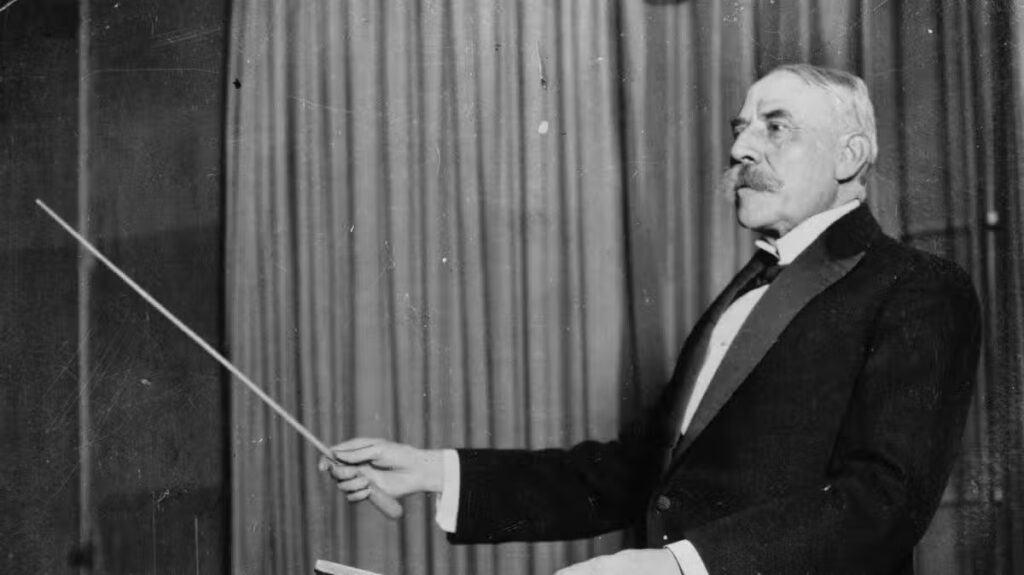
Born in Worcestershire, Sir Edward William Elgar is considered as one of the greatest composers in the country’s history. His most popular works include the Pomp and Circumstance Marches and the Enigma Variations.
In 1924, he was appointed as the Master of the King’s Musick which gave him the task of writing music for important ceremonial moments like coronations, birthdays, anniversaries, marriages and deaths.
Despite boasting a formidable record, Elgar’s music and legacy was generally overlooked until it gained popularity in the 60s.
The archive donated to the Hallé features autographed manuscripts, first-edition scores, letters between Elgar and his contemporaries and personal items like his shave bowl, revealing glimpses of Elgar’s everyday life.
“Every item has its story,” explained Arthur. “I found a man in a council house in Wolverhampton that had something he wanted to give me.
“He was in his 90s and I went to see him. His sitting room was full of the bedding in which his wife had died a few days before.
“Her mother was cook in the Elgar’s kitchen in the 1890s. She had Alice Elgar’s (Elgar’s wife) recipe book which the man gave me because he was looking for a home for it.
“Every one of these items has a story behind it.”
The archive also shows how Elgar was one of the first composers to embrace new sound recording technology. He played at the openings of both the first HMV retail store and what would later become Abbey Road Studios.
Arthur Reynolds was keen that the archive remained together in full and become publicly accessible.
Reynolds chose the Hallé as the venue due its historic connections with Elgar. The composer was close friends with the Halle’s second principal conductor Dr Hans Richter and the Hallé premiered Elgar’s Symphony No 1 in 1908 at the Free Trade Hall in Manchester.
In more recent years, during his 20 years as music director at the Hallé, Sir Mark Elder worked to make the Hallé synonymous with Elgar, including award-winning recordings, ongoing exploration of his music throughout the orchestra programme and featuring his work at key moments in the orchestra’s history.
Sir Mark also has a reputation as one of the best living interpreters of Elgar’s work.
Mr Reynolds’ detailed catalogue will be added to the orchestra’s online resources on the Connecting Manchester’s Music Archives website, enabling everyone to explore what the archive holds. Some items from the collection will be included in future exhibitions and the Hallé aims to create a permanent new, fully accessible archive in the future.
Carole Nash provided funds for the archive, along with the National Heritage Memorial Fund said: “Elgar’s work is inextricably woven throughout the Halle’s history, and it is a privilege to be able to bring this incredible legacy to life through this diverse and fascinating archive.
“The Hallé Archive already holds some of the most exciting artefacts in musical history, and the addition of this extraordinary collection marks an important step in our ambitions to opening up public access to these treasured items and the stories they hold.”
Essential parity funding was also provided by long term Halle Patron and generous philanthropist, Carole Nash, to help bring the Arthur Reynolds Elgar Collection back to the UK.
David Butcher, Hallé CEO said: “We are honoured to be welcoming this incredible collection to its new home with us at the Hallé. We are so grateful to Arthur Reynolds for entrusting us with its care, to Carole Nash and the National Heritage Memorial
Fund for their crucial support, and to all involved for their shared commitment to making this collection available to the public.
“Elgar’s work is inextricably woven throughout the Halle’s history, and it is a privilege to be able to bring this incredible legacy to life through this diverse and fascinating archive.
“The Hallé Archive already holds some of the most exciting artefacts in musical history, and the addition of this extraordinary collection marks an important step in our ambitions to opening up public access to these treasured items and the stories they hold.”
The archive will be housed in the Hallé’s current archive facilities in Bridgewater Hall and will be available for the public to view, by appointment, from September.