
Rock players seeking an acoustic guitar usually follow the adage that bigger is better, since bigger guitars like dreadnought and jumbo models usually deliver higher volume output and more assertive bass and treble.
However, choosing an ideal acoustic for playing blues – specifically fingerstyle and Delta-style blues – requires a different approach, as tighter bass, warm, round midrange and full-bodied, sustaining treble become prioritized over loud and aggressive tone.
One of the best flattop guitars for fingerstyle blues also happens to be one of the most affordable models made during the pre-war great depression era – the Gibson L-00. Gibson produced a variety of small-body flattop L series models before the L-00’s later introduction, including the L-0 and L-1 introduced in 1926 and L-2 introduced in 1929.
Latest Videos FromGuitar World
Specs changed considerably over the years, but by 1929 Gibson settled upon a consistent body style for these small-body L series flattops that measured 14.75 inches wide and had a less-rounded squared lower bout compared to rounder earlier models. The scale length is 24 ¾ inches, which allows for a very comfortable transition for Gibson electric players switching to acoustic.
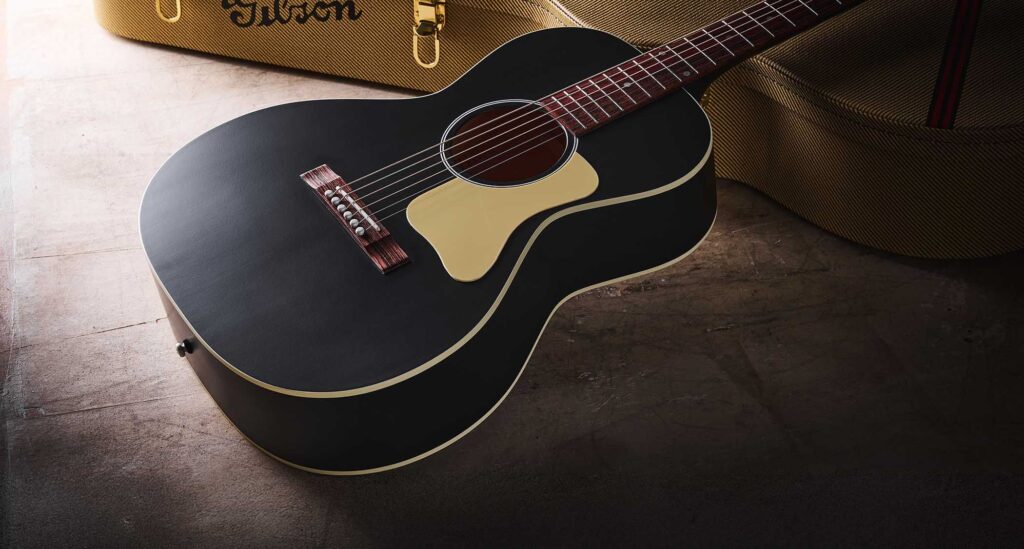
Probably due to guitarists’ shrinking budgets during the depression years, the relatively stripped-down L-00 made its debut in 1931. Distinguishing features include binding surrounding the top only, a 3- or 4-piece spruce top, mahogany sides and a one-piece slab-sawn mahogany back.
Initially, the L-00 came only with a black finish to hide the piecemeal top construction, although by 1933 Gibson started offering the model with a sunburst finish. The L-00’s neck switched from a 12-fret to 14-fret configuration, and the x-braces were scalloped also starting that same year. In 1941, Gibson offered the L-00 with an optional natural finish at an additional expense due to its higher-quality materials.
Many players prefer the more modern 14-fret neck because it offers easier access to the higher frets. However, some discerning guitarists prefer the earlier 12-fret version for its bigger tone and more robust bass, thanks to the placement of the bridge further down the body, right in the center of the lower bout, which optimizes top vibration and dynamic responsiveness.
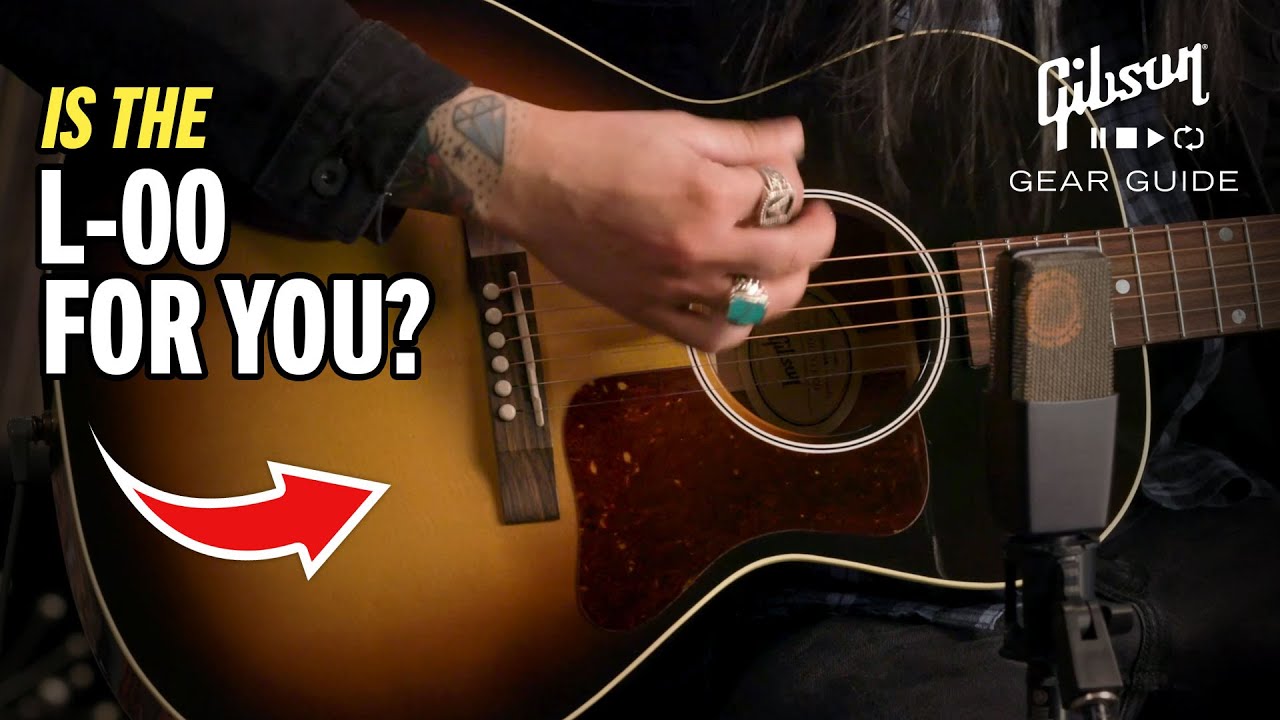
Interestingly, the cheaper L-00 and L-0 models generally have a bolder, more focused tone than fancier similar models like the L-2, Nick Lucas and Century, which have more delicate construction and lighter braces that tend to enhance sparkling treble overtones.
Gibson reissued the 14-fret L-00 as the L-00 Blues King, which was produced from 1991-2016. These are very good small-body flattop blues fingerstyle guitars, but the L-00 models Gibson has offered since 2017 are even better and built much closer to the originals.
Today Gibson offers several L-00 flattop models in 12- and 14-fret versions and with a wide variety of classic and new finish options.
With prices starting at $1,999, they are considerably cheaper than an original vintage example with prices that start around $5,000 for one in very good condition (a considerable increase from its original $25 list price in the early ’30s).