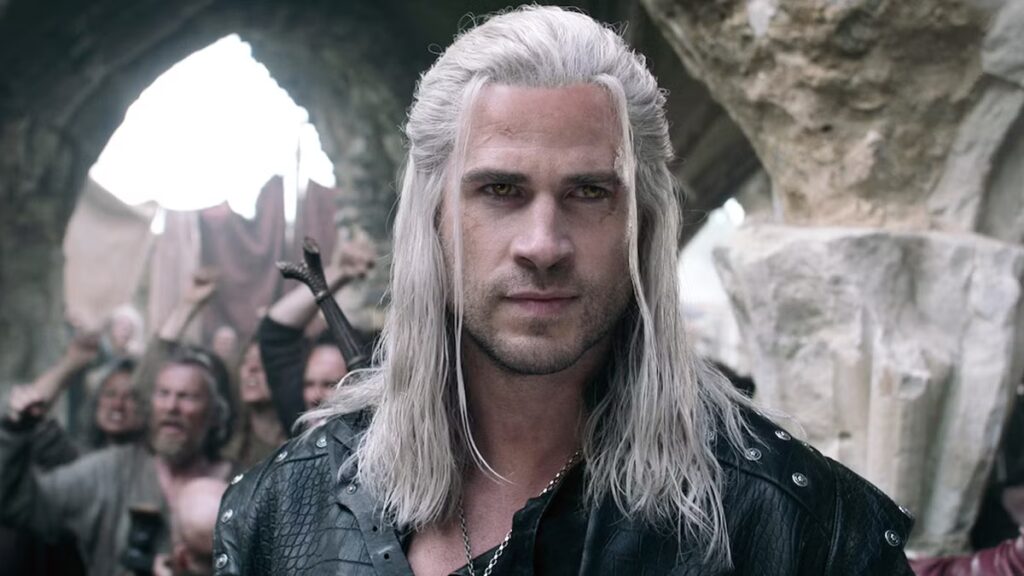

The fourth season of The Witcher introduced a massive change from the previous installments of the hit Netflix adaptation. Sure, Liam Hemsworth replaced Henry Cavill as Geralt, but the more important change is the introduction of Nimue. This will continue to alter the show’s storytelling approach in Season 5.
The character, played by both Eve Ridley and Sha Dessi, is better known as Nimue verch Wledyr ap Gwyn, or “The Lady of the Lake.” She is a very important figure in Andrzej Sapkowski’s books. Just like in the show, she is closely tied to Ciri’s powers and how they affect her larger journey. She is also a metatextual character, allowing The Witcher to explore its more mythic and archetypal elements.
Why The Witcher Began Season 4 With A Reimagined Version Of Season 1’s Opening
Like many modern adaptations of beloved storytelling universes, Netflix’s The Witcher faced controversy for its approach to the storytelling. The shocking revelation that star Henry Cavill left the show only compounded that division. Season 4 opening with Liam Hemsworth as Geralt fighting the kikimora was not a simple retread of the series’ debut.
The next scene jumped a century into the future, revealing a storyteller named Stribog reading it to a group of children, including Nimue. The child said he was not telling the story correctly, to which he replied: “It’s a hundred years ago, there’s no such thing as ‘right’ and ‘wrong.'”
One way to view this exchange is as a direct response to the fan debate that raged online since the series first launched in December 2019. To Stribog and Nimue, it’s not a matter of “canon” but their actual history. Even in our world with meticulous record-keeping, the news media, and video recordings, facts and details around historical events remain in dispute.
These characters’ discussion, in that first scene and throughout the fourth season, evolved into a deeper conversation about the difference between “facts” and “truth.”
Nimue found a different book, one written by Jaskier himself, revealing that after killing the larger kikimora, Geralt fought off a dozen smaller ones. This recontextualizes the previous seasons of The Witcher by suggesting what the audience saw relies on the point of view of a storyteller.
It’s not necessarily about whether the narrator is “reliable” or not. Rather, it suggests that while the specific details of a given arc are less important than how these events affected the characters themselves.
Nimue Is The Witcher’s ‘New’ Storyteller, So the Narrative Must Change

In The Witcher Season 4 finale, the series returns to the future, showing a much older Stribog reading to a new group of children. An adult Nimue shows up to tell him of her acceptance at a newly reopened Aretuza. Stribog gives her his copy of Jaskier’s book. He tells Nimue that stories like these “are very powerful” and “change us, and we…change them, too.”
Again, there is a meta quality to this scene. Geralt, Yennefer, Ciri, and the rest of these characters are undoubtedly Sapkowski’s creations. Yet by adapting their stories into video games and the show, they become something more akin to mythic figures. They become both a reflection of their world and the people who bring their stories to life.
Of course, in practical terms, there can never be a truly one-to-one adaptation of a novel or short story into a video game, show, or film. There are limitations and advantages in each medium that demand things change.
As showrunner Lauren Hissrich told CBR in 2025, the series naturally has to avoid the part of the books where Yennefer “is a jade statue for a very long time.” Yet there are also deliberate creative choices made to serve the story and characters while ensuring they remain relevant. Along with the perspective of the storyteller, these tales should be a reflection of the audience, as well.
Again, for Stribog and Nimue, Geralt, Ciri, and the others aren’t fictional characters. Just the same, the older man questions whether they are true or mere fantasy. His young successor, however, feels “a connection” to them, specifically Ciri.
As The Witcher book readers know, there is a good reason for that. Yet absent her magical Destiny, what Nimue feels towards these figures of her past is how fans feel about the characters and narratives they love.
How Nimue Will Change The Witcher In Its Fifth and Final Season

Nimue isn’t just a stand-in for the audience. She has a role to play in Ciri’s journey, specifically as she develops her powers to move through both space and time. In an interview with TV Line, Hissrich made it clear that Nimue and Stribog exist to show that what viewers have “seen over the last three seasons” is “not actually how it happened.”
It’s not just about the bizarre nature of Liam Hemsworth as Geralt after years of Cavill in the role. It’s about setting up a way for the show to quickly move back and forth between eras to complete the story.
Both Seasons 4 and 5 will adapt the books Baptism of Fire, The Tower of the Swallow, and The Lady of the Lake. At Aretuza, walking in Yennefer’s and Ciri’s steps, Nimue will come face-to-face with the person she so idolized.
This inspires her to learn as much as she can about these characters’ lives, which is how the events of their present will be presented to viewers. Instead of being rooted in Geralt’s, Yennefer’s, Ciri’s, or even Jaskier’s points of view, it will all be filtered through Nimue.
And, of course, Nimue will prove to be instrumental in helping them complete their journeys. This could lead to a series finale that feels familiar to book readers or, instead, one that is unique to the show. Whatever happens, it will not invalidate the events of the books or the games. Instead, it is just another version of what may have happened to these characters.
As both narrator and participant, Nimue will change the entire dynamic of The Witcher‘s final season. Then a year or so later in 2028, The Witcher 4 may change things again. Because ultimately, Nimue makes the argument that no story ever really ends, especially when fans’ connection to the characters keeps them alive in their imaginations.

- Release Date
-
December 20, 2019
- Network
-
Netflix
- Showrunner
-
Lauren Schmidt Hissrich
-

-

Anya Chalotra
Yennefer of Vengerberg