
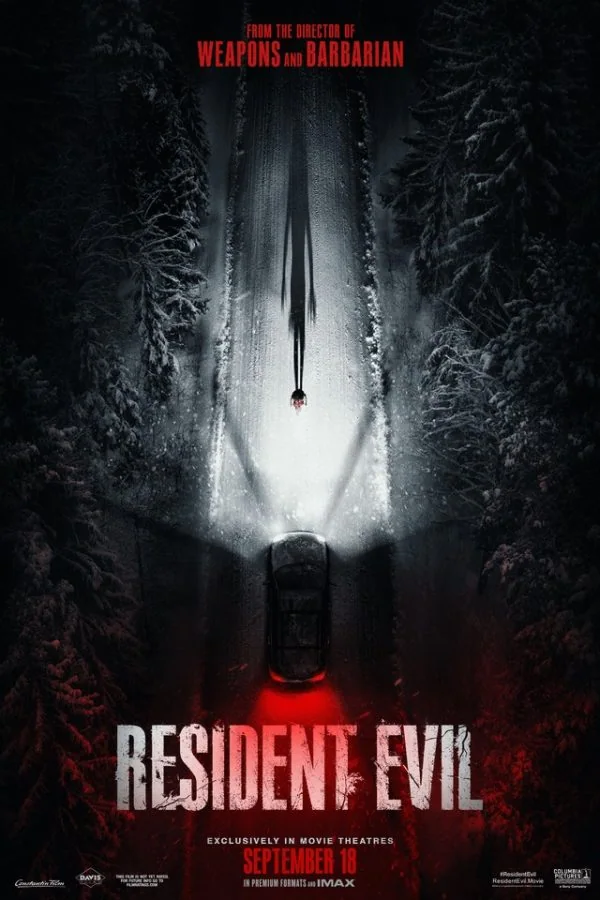
Resident Evil, 2026.
Directed by Zach Cregger.
Starring Austin Abrams, Zach Cherry, Kali Reis, Paul Walter Hauser, Johnno Wilson, Shaun W. Loeser, and Devon Deshaun Stewart.
SYNOPSIS:
Follows a hapless courier tasked with delivering a package to a remote hospital. He soon finds himself caught in the middle of an outbreak and must fight through hordes of mutated creatures to survive.
Telling a contemporary, fresh take on the Resident Evil (based on the Capcom video game series that started in 1996 on the original PlayStation and has spawned several sequels and spinoffs across the generations, not to mention a slew of live-action and animated movies of varying degrees of quality, generally agreed upon that no one has quite yet captured the survival horror atmosphere or created something definitively in spirit) Raccoon City viral outbreak, co-writer/director Zach Cregger (writing alongside Shay Hatten) understands that adapting any game is (or at the very least should be) less about fandom and more about translating such mechanics to a movie with both seamless verisimilitude, immersion, maximum set-piece propulsion, and perhaps above all else, a sense of humor about the more ridiculous aspects of the interactive medium.
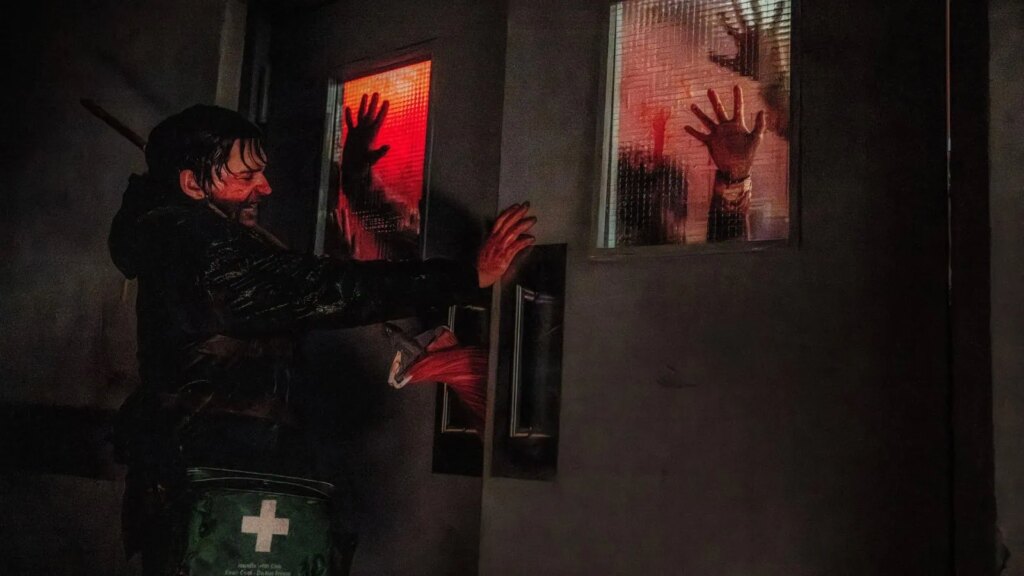
At one point, Austin Abrams’ organ transplant courier Bryan has found himself stranded en route to that city, encountering aggressive zombie-like monsters capable of mutating into other freakishly terrifying abominations (some of which are ideas lifted from the games, and others that seem to be directly from the mad mind of the filmmaker), holed up inside the barn adjacent to an eerily empty home. For reasons I won’t explain in much detail (it involves a rabid dog), Bryan has a sudden realization that every gamer’s best environmental friend, the ladder he just discarded by tossing it away, is still necessary to progress to temporary safety. One either gets it, or they don’t (which is not to say the games need to be played to do so), and such playfulness toward gameplay tropes makes up the bulk of the comedic relief here, which includes everything from indestructible padlocks to frantically searching for the correct key to sewer levels to a lead character who couldn’t accurately shoot the broadside the very barn he finds himself inside.
This is made all the more cruelly entertaining in that Austin Abrams is genuinely funny in the role, not necessarily due to incompetence but more so being in way over his head, as in, say, Leon Kennedy once was in the games as a rookie police officer on his first day of the job during the games’ depiction of the outbreak. Presumably, Zach Cregger knows that taking the protagonist of an action-horror film and presenting him as resourceful with firearms and general survival skills doesn’t necessarily help craft suspense and dangerous urgency, though that doesn’t mean it’s impossible.
Rather, it is a brilliant subversion to look at the games, which first started off as about a unit dubbed STARS (Special Tactics and Rescue Service) investigating a mansion on the outskirts of town way up in the mountains that was home to zombies and underground scientific secrets of genetic experimentation, and zag to a main character who could be referred to as a DOPE (I don’t actually have a joke to go with the acronym, but the point is clear). In that sense, it is in spiritual conversation with the games, with someone having the absolute worst day on the job, traversing the nightmarish hell of Raccoon City (which became a more pronounced setting in a couple of the video game sequels).
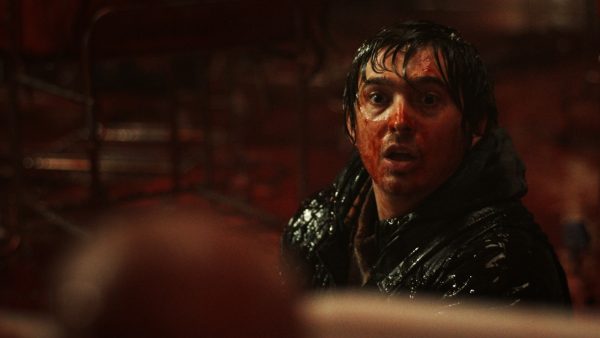
And while Resident Evil relentlessly moves from one ingenious sequence to the next, filtering horror scenarios through a combination of traditional cinematography alongside occasional, brief switches to over the shoulder third person and sometimes first-person (courtesy of Dariusz Wolski) when firing guns (Bryan, who as established aims about as well as someone who has never played a video game before, regularly takes inventory of his remaining bullets, adding pressurized context to his scarce equipment), it also isn’t solely about the rare exploding head shots or mining the scenario for winking comedic gold (there are quite a few times where Bryan’s in-peril dialogue could be taken as the trash talk or screeching of a vicarious gamer or streamer talking to an audience, either performing good or scared shitless as they frequently screw up), but also a nuanced emotional core. Of all the inevitable comparisons that will call this film a Mad Max: Fury Road no-frills, relentless onslaught of chaos, one of the more fascinating commonalities is a surprisingly moving story. Numerous dark interludes are wedged in between comedy and action, expanding on certain themes.
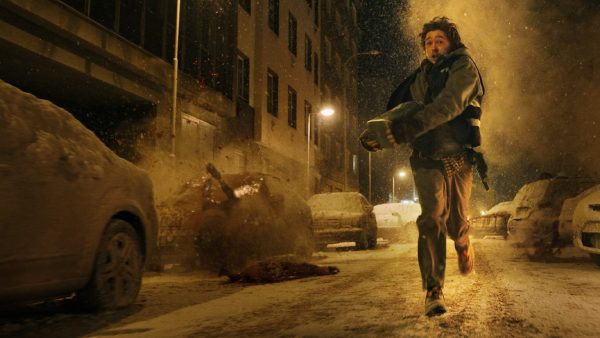
Bryan, working on a snowy night (weather conditions that extend to Raccoon City, which itself is such a clever, visually creative choice to showcase the locale in a way never seen before) and accepting another delivery, has an awkward conversation with his girlfriend while driving on the road that implies that he is unsure about wanting to be a father. He uses humor to deflect and brush off the conversation entirely, with shoddy service eventually breaking up the call, and more unfortunate woes cutting him off from society altogether. The only choice is to move forward and hopefully do some good, as he could be carrying an organ that someone, possibly even a child, desperately needs immediately to stay alive. He might even find some help along the way in the form of police officers or someone who has an idea of what the hell is going on here.
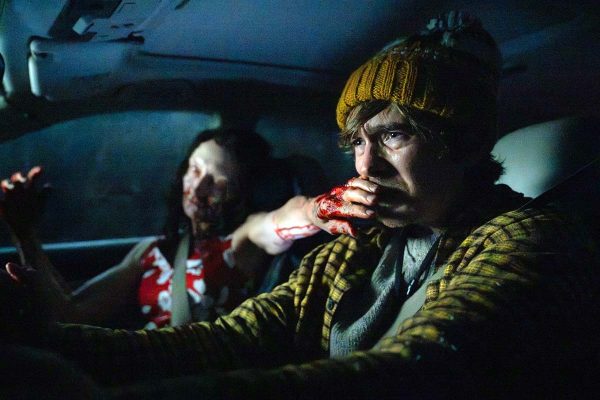
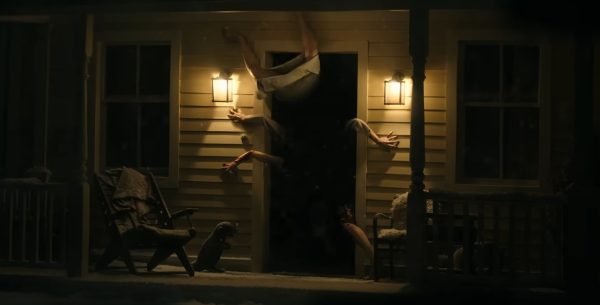
Nevertheless, a couple of standout, deeply grim sequences feel like intentional or subconscious expressions of the fear of becoming a parent. The more Bryan pushes forward, the more he wishes he could see his girlfriend again or, at the very least, have that conversation differently. It’s also an adaptation of Resident Evil, so rest assured, it’s also about finding one powerful firearm after another while getting to the bottom of the situation. Throughout, he encounters the infected, monstrous mutations of all types of bioorganisms and is essentially chased by a Katamari Damacy-like ball of “zombies,” banded together and tumbling forward, accomplished impressively by hiring acrobatic gymnasts; it is somehow stylishly cool and terrifying, mounting dread with each roll forward.
Although several recognizable actors make cameo appearances (all doing good work, popping in to inform the next objective, play into the emotional through line, or add to the filmmaker’s trademark skillful misdirection), this is Austin Abrams’ film for 90 minutes (he is in every frame). Not a single one of those is wasted, putting him through the absolute wringer of practical blood-and-gore hell up against familiar and new mutations. And yet, what’s hard to shake is a scene that also takes a mental toll, doubly so considering where Bryan is in life. For as much as a cliffhanger the ending is leaving one wishing for a bit more closure to this origin story chapter, it’s also pointed, seemingly deliberate, and uproariously so, with tragedy on the surface and underneath.
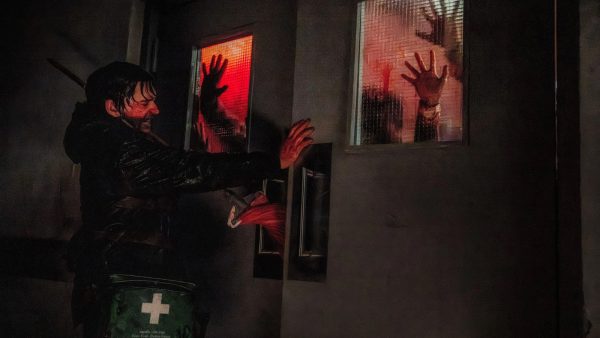
Zach Cregger’s Resident Evil is also exhilarating, electric fun, flexing one incredible set piece after another while fusing horror and humor with winking playfulness as it translates gaming tropes and mechanics to cinema. It’s the beginning of something special (should he continue directing them), and at the risk of sounding selfish, one hopes he makes these until he is on his deathbed.
Flickering Myth Rating – Film: ★ ★ ★ ★ / Movie: ★ ★ ★ ★
Robert Kojder