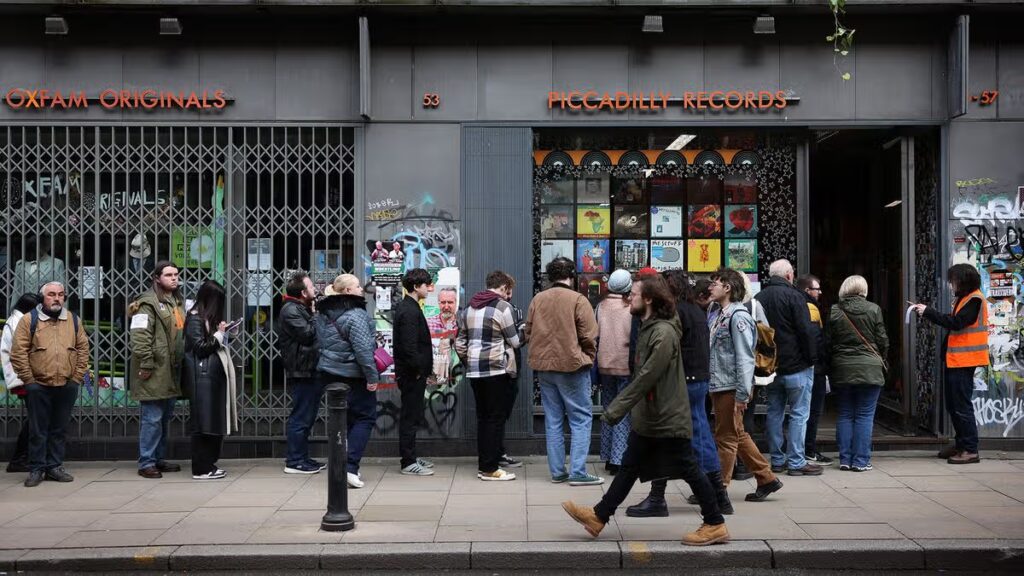

Manchester’s Northern Quarter has always been a place of creative and cultural contrast.
By day, its cobbled streets and colourful shopfronts showcase the independent boutiques, record stores and small independent businesses that helped give the area its distinctive character.
By night, the neighbourhood takes on a different rhythm, as the orderly queues of daytime shoppers give way to six-deep lines of revellers in search of craft beer and orange wine.
Click here to get the biggest stories straight to your inbox in our Daily Newsletter
But for the independent retailers who helped make the area what it is today, that transformation is becoming increasingly difficult to ignore.
Retailers have warned that the Northern Quarter’s growing reputation as a destination for bars, restaurants and nightlife is changing the character of the area and is putting those that made it so popular at risk of being ‘pushed out’.
The neighbourhood has long been associated with its independent shops and businesses, but traders say rising costs, changing rents and increasing numbers of food and drink venues are putting pressure on retailers.
Their concerns come as the Northern Quarter Business Improvement District (BID) prepares to launch in January, bringing a planned £4m of investment to the area over five years. The BID’s priorities include tackling anti-social behaviour, increasing street cleaning and improving safety at night.
But for some traders, the biggest challenge facing the Northern Quarter comes during the day.
Lynn McKay, who has run Kiku Boutique on Tib Street for 18 years, said she had watched independent businesses around her ‘disappear’ as the area became increasingly commercially attractive.
She said many had been replaced by bars, restaurants and cafes, which she believes can be more attractive to landlords because of the higher rents they are able to command.
“We’re really lucky – our landlord is independent, he owns the building, and he’s kept us at a fair rate,” she said. “A friend of ours had a brilliant vintage menswear shop on Port Street for 30 years. The rateable value of the area changed, the rent went up, and it forced him out.”
The story is similar across much of the Northern Quarter, with business rates rising by as much as 400% over 10 years in certain areas.
In 2017, Soundbase Megastore, an independent store selling DJ and music production equipment, operated out of a property on Oldham Street valued at £16,750. Now, the building houses two of the Northern Quarter’s most popular bars, Junior Jackson’s and Lost Cat, and now boasts a value of £87,250.
Lynn pointed to the redevelopment of the Corn Exchange and Royal Exchange in the late 1990s as an example of how independent traders can be squeezed out as areas become more commercially desirable. Now, she said, Afflecks remains one of the few places where new independent traders can establish themselves.
“When there’s no independent shops left, the whole city becomes homogenised,” Lynn said. “You wonder why there’s so many coffee shops – that’s what makes money.”
But Paul, who works at Piccadilly Records, a Northern Quarter institution that opened in its current building almost 30 years ago, said the area’s independent businesses still play an important role in maintaining its character.
He said there was a strong sense that traders ‘look after’ the area themselves, because they have a direct interest in keeping the streets welcoming and well-maintained.
“The Northern Quarter does kind of look after itself in a way,” he said. “A lot of it is independent businesses, so they’ve got a vested interest in making sure the area is well kept. They’re shopkeepers and they’ll put the effort in.”
Paul said that bars and restaurants had historically been able to survive for longer than retailers, although he believes rising costs are beginning to affect them too.
He said: “If it’s food and drink, they do tend to survive a lot longer. That’s just the way it is. But I think even that’s changing now, with the price of food going up.”
The difference is particularly noticeable at night, when the Northern Quarter becomes a hub for Manchester’s nightlife, drawing crowds far removed from the daytime shoppers.
Paul said: “Bars and restaurants seem to thrive around here, especially on a Friday and Saturday. It’s like a mini festival. But I wouldn’t live anywhere else.”
However, the crowds have also brought challenges for traders, particularly around anti-social behaviour. Vinny, head butcher at The Butcher’s Quarter, which has traded in the Northern Quarter for 11 years, said anti-social behaviour was currently one of the biggest challenges facing businesses.
He said increased policing had been helpful but only took place on certain days, while ‘intimidating’ behaviour could deter customers and have a knock-on effect on footfall.
Paul said he had seen a particularly noticeable increase in problems in recent months, which he linked to the closure of Piccadilly Gardens, but that a greater police presence had made a notable difference.
“It was really bad a few months ago,” Paul said. “Piccadilly Gardens closing pushed it towards us. We complained about it and the police really did a good job.”
The experience has left some traders looking to the BID to provide longer-term improvements to the area.
One local resident, Luke, said the changes to the Northern Quarter were particularly noticeable at weekends, when the area could feel very different from its quieter daytime atmosphere.
“During the day you still get that independent feel, but at night it can feel like a completely different place,” he said. “You want people to come and enjoy the area, but you don’t want the independent side of it to disappear.”
Vinny said plans to pedestrianise parts of the Northern Quarter could help increase footfall, although he also raised concerns about the practical impact on businesses, particularly when it comes to deliveries.
For Lynn, however, the future of independent retail depends on more than making the streets cleaner or safer.
She believes small businesses need greater support, including measures to keep rents affordable and bring more people into the area during the day.
She also criticised what she sees as the area’s exclusion from some of Manchester’s major seasonal events, including Christmas lights, festive markets and Chinese New Year celebrations.
She said: “People don’t realise the Northern Quarter doesn’t get any of that. It’s often left out entirely.”
She believes more daytime events and cultural activity could help independent retailers benefit from the wider footfall generated by Manchester’s cultural programme.
Paul also believes there is still demand for independent retail in the neighbourhood. He said: “There aren’t that many empty spaces in the Northern Quarter.
“When somebody moves out, somebody else seems to move in pretty quickly. It just depends on what goes in there.”
The Northern Quarter BID received 91% support in its ballot and says its investment will cover retail, daytime and night-time businesses.
Vaughan Allen, chief executive of CityCo, which is managing delivery of the BID, said its business plan was based on consultation with businesses across the area.
He said improving safety and cleanliness would be its first priority, with the organisation working with businesses across the district to deliver practical and visible improvements.
But Lynn, echoing a sentiment shared by many of the Northern Quarter’s independent retailers, said that despite the pressures facing businesses like hers, she had no plans to leave the area she had called home for almost two decades.
“There aren’t many of us left doing it like this anymore,” she said. “This is my baby. This is what I’ve created. I don’t know what else I’d do.”