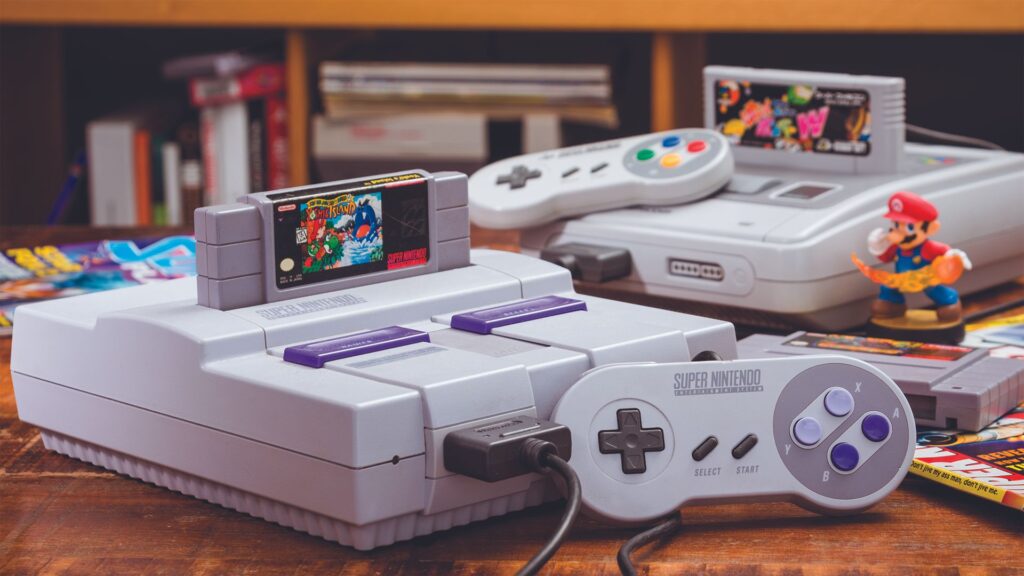

Without getting too misty-eyed, a “physical game” used to be easy to define. You bought a box and the game was sitting inside on a disc or cartridge.
Fast-forward to today and things are more complicated. The box might hold a download code or a Game-Key Card that still needs software from a server, while some expensive collector’s editions don’t even include a physical copy at all. So, with Sony steering full-steam toward Playstation’s digital-only future, what exactly are we going to mean by a “physical game” in 2030?
To find out, I spoke to Perry Gresham, head of data at MIDiA Research, and James McWhirter, senior analyst at Omdia. Their answers suggest the physical box isn’t necessarily going anywhere – but what it contains, and what owning it gives you, may change dramatically.
Latest Videos FromGamesRadar+
Physical demand could outlive the disc

It’s easy to look at the growing share of digital game sales and assume the physical market is heading towards zero. Gresham thinks the picture is more complicated.
“[The] decline in consumer demand is somewhat overstated by the headline digital vs physical figures reported in financial statements,” he says. “It’s important to be careful about what’s actually being measured – there are factors that distort the picture. PC and mobile games are almost entirely digital-only, a lot of games now aren’t seeing a physical release, and importantly, stats reported often include in-game spending within the ‘digital’ part.”
Gresham also notes that discounted older games still count as digital unit sales, while second-hand physical sales aren’t captured in publisher financials.
There’s still plenty of appetite for something tangible, too. Recent YouGov research found 51% of US console gamers generally preferred discs or cartridges, with permanent ownership the most commonly cited reason among physical buyers.
Gresham expects the physical market decline to moderate as we approach 2030, in part because many of the people still buying physical games actively care about ownership, resale, or collecting. If publishers force that audience towards digital, some may simply stop buying instead. “There’s a risk of shrinking the pie if those physical buyers don’t shift over,” he says.
If that decline does flatten, the pressure may increasingly come from the supply side: companies could stop making discs and cartridges before players stop wanting to buy them. PlayStation is already moving in that direction, with Sony planning to end disc production in 2028.
Why publishers want the game off the disc

Changing buying habits are only part of the appeal for publishers – there are some very practical reasons to get the game itself off the disc or cartridge.
On Nintendo platforms, physical remains a major route to market. Omdia estimates that just under 40% of full-game purchases in 2026 will be physical. But McWhirter says the cost of Switch 2 Game Cards is significant, with Game-Key Cards offering publishers a cheaper alternative.
“The cheaper per-unit cost of Game Key-Cards allows publishers like Square Enix and Ubisoft to launch at lower price points while also giving them the flexibility to discount post-launch and avoid ‘Switch tax’ and code-in-box reprints,” he says.
McWhirter notes that Nintendo has wrestled with cartridge cost and supply before, citing the Famicom Disk System and Nintendo 64DD as earlier attempts to find alternatives.
Physical manufacturing creates an earlier deadline, too. On PlayStation and Xbox, McWhirter says download-dependent releases can give developers more time to finish a game before it has to be locked down for manufacture. “This is more important for games aiming to launch during periods where release dates are less flexible, like the holiday season,” he says.
The disc also sits awkwardly with platform strategies that increasingly stretch beyond the living-room console. PlayStation and Xbox are looking towards PCs, handhelds, and cloud streaming to reach players on more devices.
McWhirter puts it plainly: “Discs are likely seen as an impediment,” while digital purchases can potentially follow players across consoles, PCs, handhelds, and cloud streaming.
What does physical ownership actually mean?
Once the game itself no longer has to live on the disc or cartridge, the physical object has a different job.
Switch 2 Game-Key Cards are a good example: they contain no game data, but the card still behaves much like a traditional physical copy once the software has been downloaded. “Game-Key Cards are not single-use codes and allow for lending and resale,” McWhirter says. “They also do not require a Nintendo eShop account.”
Gresham thinks that idea could eventually move beyond familiar game media altogether, with a physical token representing the purchase – potentially something as simple as a flash drive.
A code in a box works very differently. Redeem one of those and the game becomes tied to your digital account, leaving the physical package with no transferable copy to lend or sell. In practical terms, a Game-Key Card with no game stored on it can preserve more of the freedoms associated with physical ownership than a lavish collector’s edition containing a download code.

The weak spot is the download itself. A fresh Game-Key Card installation still depends on the game data being available online, although McWhirter notes that data can also be transferred locally between Switch 2 handsets.
Gresham thinks the same questions will increasingly matter for digital purchases too: “For consumers, the merit of any digital solution will come down to what rights come associated with their purchase.
“Can access be revoked, and does it depend on platform servers? Can the game be played offline? Can I transfer or resell it? Will access be available in 20+ years?”
Nintendo’s Virtual Game Card system already shows one possible direction, bringing some physical-style lending to digital purchases. Gresham points to PC as a contrast, where competition between storefronts helped encourage less restrictive approaches to digital licensing; console platforms already have integrated digital ecosystems, leaving them with far less incentive to offer the same freedoms.
Why the box survives

Even if the disc disappears, there are still good reasons to keep something on the shelf. Boxed games remain useful for gifting and retail, while the packaging itself can carry value for players who want something tangible from a favourite release. Case in point: I still have my GTA 5 and Red Dead Redemption 2 boxes on display.
Sony has already said that new PlayStation games will continue to be sold through retailers after disc production ends in January 2028, albeit in digital formats. McWhirter expects that to mean packaged code-in-a-box releases.
There’s a very good chance that physical games become increasingly collector-focused.
Perry Gresham
Whether a download code can simply take the disc’s place is less certain. McWhirter points out that code-in-a-box releases on Switch have generally worked better later in a game’s life, when publishers want a cheaper reprint without committing to another run of cartridges. “And because code-in-a-box is rarely associated with day-and-date releases, they tend to end up in supermarkets at discount prices,” he says.
GTA 6 could prove that model can work at launch, although few games can count on anything like its level of demand – or, at the time of writing, level of leaks.
At the other end of the market, physical games may become more elaborate. Gresham sees a parallel with music, where streaming handles most everyday listening while vinyl and other physical formats cater to fans who want to collect.
“There’s a very good chance that physical games become increasingly collector-focused,” he says. Gresham argues that digital deluxe editions generally struggle to command the same premium because they lack the perceived scarcity and tangibility of a physical collector’s edition.
McWhirter also points to specialist publishers already producing physical versions of digital games in the low thousands, often selling them at a premium through Amazon or direct. As mainstream volumes fall, that model could become increasingly important – leaving the traditional boxed disc squeezed between cheap digital access and physical editions made specifically for people who really want them.
By 2030, that could leave mass-market retail selling boxes that mainly deliver digital access, while genuinely physical releases increasingly cater to enthusiasts willing to pay for them.
So what is a “physical game” in 2030?
By the end of the decade, “physical” may tell us surprisingly little about where a game lives; the box could contain the actual software or unlock a download. For some, it might simply give you something tangible to put on a shelf.
Can you lend it, resell it, play it offline, or still access it years later? A Game-Key Card and a code-in-a-box might look equally physical at the checkout, but they can leave the buyer with very different rights once they get home.
Perhaps the better question in 2030 won’t be whether a game is physical, but what the thing you’ve bought actually lets you do.
More from Saturday Read: “It really is accepting of everybody”: How Games Done Quick uses community to make a difference.