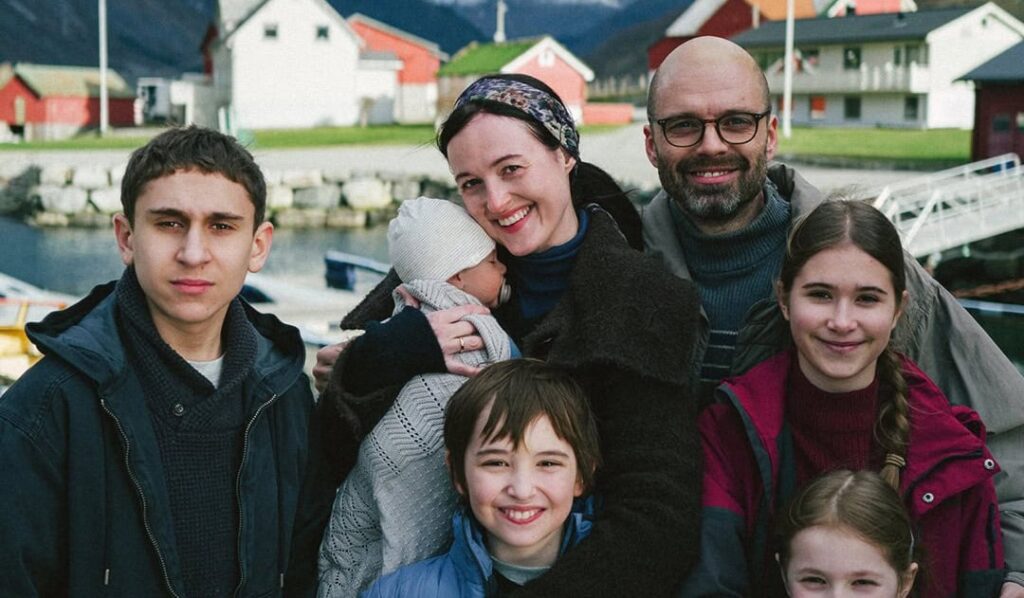

Fjord, 2026.
Written and Directed by Cristian Mungiu.
Starring Sebastian Stan, Renate Reinsve, Lisa Carlehed, Henrikke Lund-Olsen, Vanessa Ceban, Jonathan Ciprian Breazu, Ellen Dorrit Petersen, Lisa Loven Kongsli, and Markus Tønseth.

SYNOPSIS:
An immigrant Romanian family living in Norway is subject to an investigation and faces the scrutiny of the local judicial system.
My most anticipated movie coming into TIFF was Fjord. The film follows in the footsteps of Anatomy of a Fall by being half in English and a crime drama about foreign Europeans navigating the legal system of new countries they inhabit. Both also won the coveted Palme d’Or; however, there is little subject matter here that hasn’t been done better in films like Fall or Thomas Vinterberg’s The Hunt.
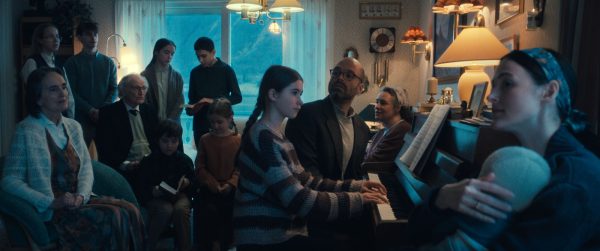
The film concerns a devout Christian Romanian family who move to Norway and whose family values are tested when one of the children at school is seen with bruises. The father, played by Sebastian Stan, is strict and doesn’t allow the children internet or phones or the ability to go to parties after they misbehave, but is he abusive or just singled out for his religion?
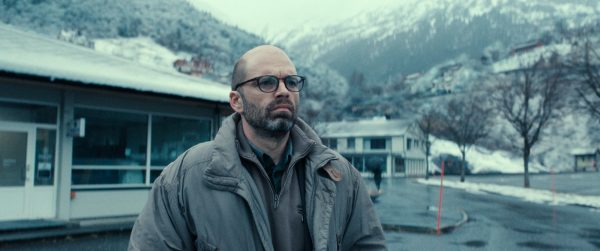
There are a couple of flaws with the way the movie goes about its business. For one, Stan’s character the more intimidating of the parents, isn’t initially singled out for his abuse; his wife (Renate Reinsve) is. Eventually the film’s plot evolves or devolves into a culture war, but this timely material takes a lot to get going. Every scene begins a few seconds before its main objective starts and continues for several seconds after, and continues throughout its 146-minute running time.
Director Cristian Mungiu purposefully keeps his characters at arm’s length, never bringing the audience close enough for a close-up to really relate to the characters, and his dialogue (yet another writer-director) is as long-winded as his Q&A after the screening (without any Qs allowed).
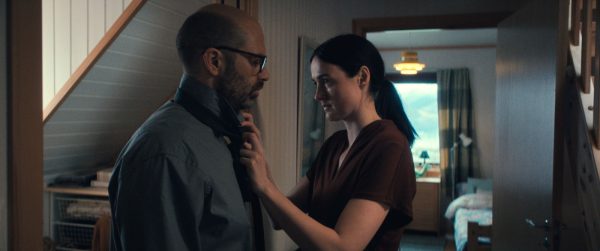
The setup is extremely effective, but the execution is left wanting. The antagonist outright states they are intolerant of the family’s religion, which forces the audience to take the family’s side when further nuance would have mined better drama. The film’s biggest opponent, the prosecutor, is a rather broad, cartoonish figure; James Mason in The Verdict this is not. A moment of narrative momentum is introduced when Stan’s character says he is taking over, but this amounts to little in terms of plot beyond a mention of making bad YouTube videos (which the family is against) and associating with deplorables.
Moving one’s family to a new place, especially a new country is an act of faith. To fight is an act of faith that things will get better. To endure requires belief in the people around you. The family enlists the help of neighbours next door to have them fight. To end up where the film ultimately does feels like a hedge, a half measure and a retreat from the accountability that the audience is set up to expect. Given what Mungiu mentioned in the Q&A about cancel culture and society, the finale ultimately reads like an act of bad faith.
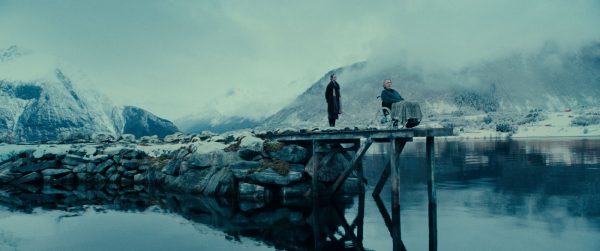
The film is cynical and argues society is the same, albeit more performative. Suggesting children are missing out by not getting to watch YouTube or have a phone when, as central as those things are, is backed up by countless studies regarding brainrot seems rather tone deaf.
Sebastian Stan and Renate Reinsve give good performances that are wonderfully subtle but far from the intensity of their previous work or as multi-dimensional or interesting as their last collaboration, A Different Man. Ultimately, they are undersold by the material, which is quite a lot of work to sit through for little payoff. Its simplicity works as a conversation piece but bores its audience over an indulgent running time.
Flickering Myth Rating – Film: ★ ★ ★ / Movie: ★ ★ ★
Will Hume
https://www.youtube.com/watch?v=embed/playlist