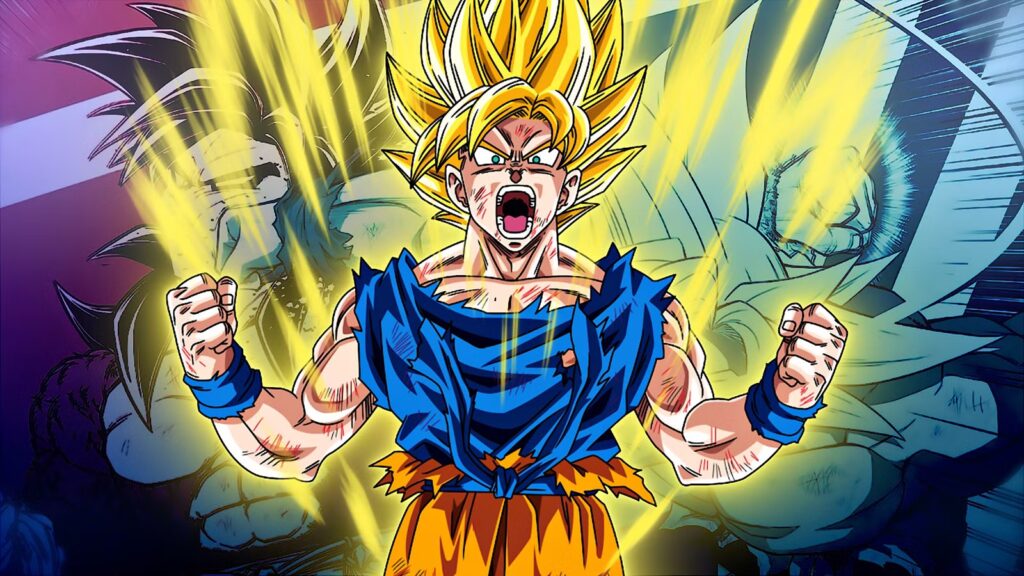

The Dragon Ball franchise has come a ridiculously long way, moving from the original series to all the way to the recent hit Dragon Ball Daima. While the late Akira Toriyama was behind most of that journey, giving the franchise some of its biggest stories and most iconic moments in Dragon Ball history, there is one major chapter that he didn’t actually write himself. The fandom has argued over its canonical status for decades, but there is no denying that Dragon Ball GT remains a major part of Goku’s legacy.
Toriyama gave fans masterpiece after masterpiece throughout his five-decade career, but when it comes to a Dragon Ball project he didn’t write, GT stands out. The anime has spent decades stuck in the middle of the canon debate, especially after Dragon Ball Super took the franchise in a completely different direction.
But that doesn’t erase what the series actually did. It gave Goku a final adventure that brought back the sense of mystery from classic Dragon Ball, introduced Super Saiyan 4, and eventually delivered one of the most emotional endings in the franchise. Even Toriyama described GT as a “grand side-story,” giving the series a strange place in Dragon Ball history rather than simply treating it as something that never happened.
The canon question may never have a clean answer, but as Goku’s original chronological finale, GT still has something that few Dragon Ball stories can match: a real ending to his journey.
The Black Star Dragon Balls Kick Off A Nostalgic Space Adventure In Dragon Ball GT

While the “GT” in Dragon Ball GT officially stands for Grand Tour, fans know it unofficially translates to “Goku Time.” And honestly, that isn’t far off. Across its 64 episodes, the story keeps coming back to Goku, whether he’s chasing the Black Star Dragon Balls, dealing with his new child body, or getting dragged into another fight that somehow threatens the entire universe.
The series starts by trying to bring back the adventure-heavy feel of the original Dragon Ball. Goku is turned into a kid again and sent into space with his granddaughter Pan and a slightly older Trunks, who replaces Krilin and Bulma from the original series. Taking place five years after the End of Z, the trio has one year to find the scattered Black Star Dragon Balls before Earth explodes. Things get even harder with Goku struggling to maintain Super Saiyan 3 in his new body.

Eventually, GT drops the space adventure and moves into three major arcs centered around Baby, Super 17, and the Shadow Dragons. The last arc has one of the series’ best ideas: the Dragon Balls themselves become the problem after decades of the Z-Fighters relying on them to fix every disaster.
Then there’s Super Saiyan 4. Goku’s battle with Baby pushes him back toward his primal Saiyan roots, creating one of the most iconic transformations in Dragon Ball history.
But GT‘s biggest contribution is still its ending. After defeating Omega Shenron, Goku merges with Shenron and disappears from the mortal realm. The story then jumps 100 years ahead, where an elderly Pan briefly spots Goku watching the World Martial Arts Tournament. He doesn’t fight, transform, or save anyone. He simply watches over his family before disappearing again. For Goku, that’s about as fitting a goodbye as Dragon Ball could have given him.
The Final Moments Of Dragon Ball GT Remain An Unmatched Franchise Finale
The canon debate around Dragon Ball GT gets a lot easier when the franchise’s own timeline rules are taken into account. Dragon Ball has already established that multiple timelines can exist, with Future Trunks jumping between them to save his ruined future from threats like the Androids and Goku Black. So instead of trying to squeeze GT directly into the same timeline as Dragon Ball Super, treating it as a separate branch makes a lot more sense.
Toyotarou has also suggested that fans can decide their own personal continuity and what counts in their own minds, which makes GT‘s place in the franchise even more interesting. It may not line up perfectly with Super, but that doesn’t erase what the series accomplished. GT gave Goku a final adventure, created Super Saiyan 4, and actually brought his story to a proper ending.
That’s the part that still makes GT special 29 years later. Super can keep giving Goku new transformations, stronger opponents, and battles against gods, while Daima can bring back ideas like Super Saiyan 4 in an entirely new way. But GT remains the story that let Goku finally step away from the spotlight. Whether that counts as the official ending or an alternate one may always be debated, but its final image of Goku disappearing into the future remains one of the most memorable goodbyes Dragon Ball has ever delivered.

- Release Date
-
1997 – 2003-00-00
- Network
-
Fuji TV
- Showrunner
-
Akira Toriyama
- Directors
-
Minoru Okazaki, Mitsuo Hashimoto, Yoshihiro Ueda, Takahiro Imamura, Hidehiko Kadota, Osamu Kasai, Hiroyuki Kakudou, Shigeyasu Yamauchi
- Writers
-
Akira Toriyama
-

Masako Nozawa
Oob (voice)
-
Yûko Minaguchi
Uncredited