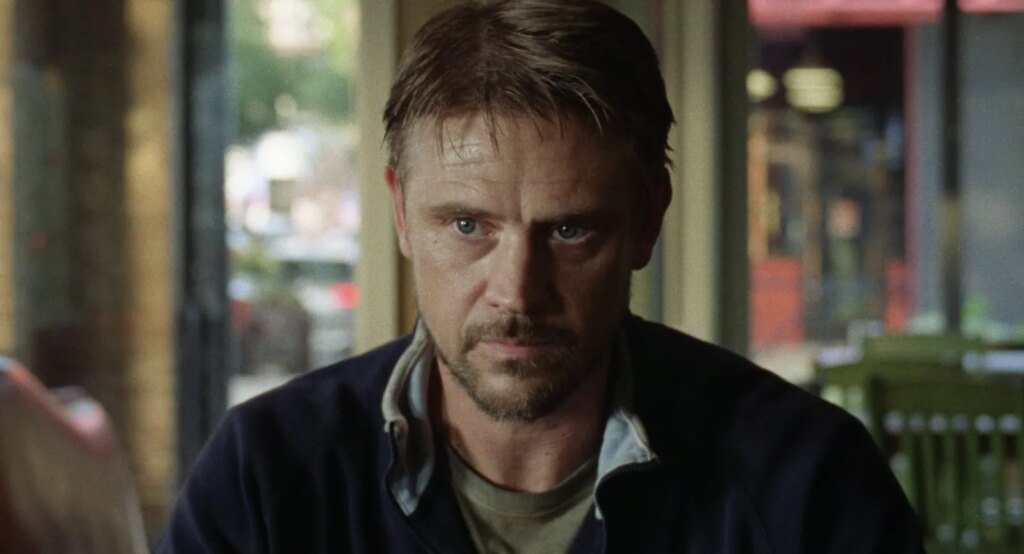

Atonement, 2026.
Written and Directed by Reed Van Dyk.
Starring Boyd Holbrook, Hiam Abbass, Kenneth Branagh, Gheed, Majd Eid, Tahseen Dahis, Yara Bakri, Gratiela Brancusi, Ali Elian, Khris Davis, Nareman Abdelkareem, Yahya Firas, Alhakam Alheeti, Jake Weary, Matthew Leone, Salam Khalaf, Kalama Epstein, Islam Al-Awadi, Dino Kelly, Paul T. Taylor, and Amanda Warren.

SYNOPSIS:
A troubled marine seeks to reconcile with the survivors of an Iraqi family he and his unit fired on back in 2003.
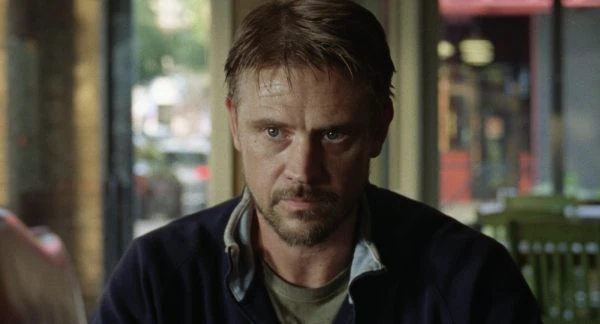
There is mighty ambition in Atonement‘s attempt to explore the aftermath of the Iraq War alongside the scars and trauma left behind in a direct connection between both sides. And while any filmmaker can make a great movie on any subject, one can’t help but feel that writer/director Reed Van Dyk (working from a real-life story based on an article by Dexter Filkins) is the wrong person for this ambitious narrative. His film doesn’t necessarily portray its Iraqi family characters offensively or untruthfully, but rather simply doesn’t give them enough screen time, which possibly signals that even the filmmaker knows he isn’t equipped to tell much of that side of the story.
What’s more disappointing, deflating, upsetting, and even infuriating is the bait-and-switch narrative, which begins during the Iraq invasion, following the Khachaturian family with Mariam (Hiam Abbass) and her husband having temporarily moved over to a supposedly safer side of the area with their children and infant grandchild. Suddenly, bombs go off, and they decide that the safest course of action could be to traverse away from the hot zone back to the family home. This is also where several American soldiers are introduced on a rooftop, most notably Lou (Boyd Holbrook), who finds himself in a situation where he believes that the only option is to pull the trigger on the car and whoever exits the front seat. It’s an unsparing, savage, brutally honest depiction of harrowing innocent casualties in the name of a questionable invasion, and the culmination of an intense opening act setting up a destroyed family and shattered soldier psyche.

Up until this point, the film also feels like an international film while giving Iraqis dignity and real character, which is certainly commendable coming from an American filmmaker. Even when these characters return, they don’t crumble into clichés. However, therein lies the problem, in that the bulk of this film actually takes place 10 years later, centered on the traumatized Lou, aspiring to be a lawyer, but struggling with the dishonorable discharge, pain medication addiction, and harboring regret over his actions. His relationship with the otherwise supportive Anna (Gratiela Brancusi) is also uncertain.
There is also no other way to put this other than that the goodwill here is turned into something insulting in watching this former soldier wallow and seek atonement. It takes the narrative and twists it into an American emotions-first perspective, sidelining the Khachaturians, who not only offer a fresher perspective and are more interesting characters (and exceptionally acted), but are also who the film sets itself up to be about from the beginning. None of this is to dismiss Boyd Holbrook, who gives one of the most layered, nuanced, and internally devastating performances of his career, but it all serves what could be considered Crash 2.0, now with less melodrama.
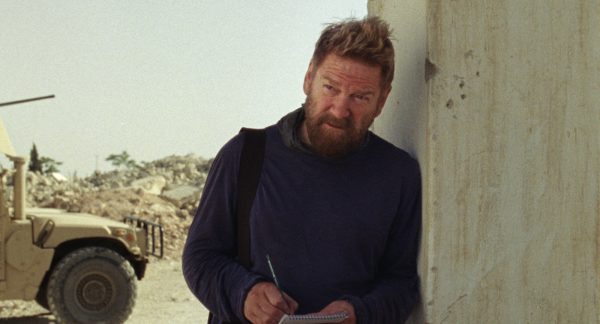
Over an hour into the film, the narrative comes back around to the Khachaturians, with emphasis on Mariam and daughter Nora (Gheed), now a mother of multiple children married to Assad (Majd Eid), but only because Lou has reconnected with journalist Michael Reid (Kenneth Branagh) to hopefully broker and in person sit down and discuss what happened from all angles, to move forward with a clear conscience. The most baffling aspect of this is that even Michael arguably has a bigger slab of the pie chart if you divide the chapter structure by time, even though the role is mostly an observer without much to do aside from looking at such situations from a neutral vantage point, as Lou is trying to bring together.
As well performed and dramatically compelling as Atonement is, especially during the eventual meeting, it repeatedly trips over itself. It is explicitly about Lou seeking and finding some form of forgiveness, and another familiar tale of soldier PTSD, largely setting aside everything that could set this film apart as successfully ambitious. That said, there is a way to make this narrative satisfying: take the opening sequence and place it elsewhere as a flashback that reveals the truth, forcing viewers to recontextualize what they have seen so far. As is, it comes across as if the film is quick to shove aside its Iraqi characters to focus on the usual American soldier PTSD narrative beats, as if that perspective is what matters most. It’s not, and it becomes increasingly infuriating to watch the film center Americans first.
Flickering Myth Rating – Film: ★ ★ / Movie: ★ ★ ★
Robert Kojder
https://www.youtube.com/watch?v=embed/playlist